

In luxury fit-outs, an interior design style is rarely a question of taste alone. It is a working brief that shapes everything downstream of the visual mood board: the stone you select, the way a ceiling cornice meets a wall, the species of veneer that ages well in Dubai’s climate, the depth of a joinery reveal, the hardware your fabricator must source from Brescia or Berlin.
For homeowners commissioning a 6,000 to 18,000 sqft villa in Emirates Hills, Jumeirah Bay, District One or Palm Jebel Ali, the style decision sits upstream of nearly every other choice. It determines whether you live with Calacatta Borghini or microcement, whether your ceilings carry hand-applied stucco or a clean shadow gap, whether your joinery hides behind push-to-open mechanisms or announces itself with hand-cast bronze pulls.
This guide walks through the major interior design styles that shape Dubai’s high-end residential market today. For each, you will find what defines the style philosophically, the materials that make it work, the fit-out detailing that separates a thoughtful execution from a costly imitation, and what owning that style realistically asks of you over time.
As David Hicks, the British designer who shaped a generation of interiors, once observed, “The best rooms have something to say about the people who live in them.” The styles below are simply different vocabularies for that conversation.
Why Interior Design Styles Matter More in Luxury Fit-Outs
In a standard apartment fit-out, style is largely cosmetic. Paint colour, joinery profile, lighting fixtures. Swap them and you have a different look.
In a luxury villa fit-out, style sits at a structural level. It dictates ceiling heights that may need to be reframed, wall thicknesses that must accommodate marble book-matching, slab cut-outs for sunken showers, MEP routing that respects coffered ceilings, and lighting circuits that may run into the hundreds of independently dimmable zones.
A 12,000 sqft Italian Villa interior in Dubai Hills will typically demand a fit-out budget between AED 950 and AED 1,800 per sqft, with marble and joinery alone accounting for nearly 45 per cent of the spend. A Scandinavian-inspired residence of the same footprint may sit at AED 600 to AED 1,100 per sqft, with the savings appearing in stone and ornamentation rather than craftsmanship, which often costs more in restraint than in flourish.
Style, in other words, is a budget structure as much as an aesthejtic one. Our interior design and fit-out services cover the stages where these decisions turn into built work, making the choice of the right fit out company an important part of the process.”
Table 1: How Style Shapes the Fit-Out Budget
| Style | Typical fit-out cost (AED/sqft) | Dominant spend category | Craftsmanship intensity |
|---|---|---|---|
| Scandinavian | 600 to 1,100 | Joinery, lighting | Medium |
| Contemporary | 750 to 1,400 | Stone, lighting, AV | Medium to high |
| Industrial | 550 to 950 | Steel, concrete, glass | Medium |
| Hamptons | 700 to 1,300 | Joinery, panelling | High |
| Italian | 900 to 1,600 | Marble, joinery | High |
| Italian Villa | 950 to 1,800 | Marble, plaster, joinery | Very high |
| Art Deco | 1,000 to 1,900 | Marble, brass, lacquer | Very high |
| Classical | 1,100 to 2,200 | Ornament, mouldings, marble | Very high |
| Gothic | 1,200 to 2,400 | Stone carving, joinery, glass | Exceptional |
| Mediterranean | 750 to 1,300 | Plaster, terracotta, wood | High |
| Moroccan | 850 to 1,500 | Zellige, plaster, carving | Very high |
| Bohemian | 600 to 1,100 | Textiles, joinery | Medium |
| Cottage | 650 to 1,200 | Joinery, paint, textiles | Medium to high |
| Retro | 700 to 1,300 | Joinery, lacquer, upholstery | High |
Ranges reflect typical Dubai villa fit-outs; final pricing depends on material grade, ceiling complexity, and joinery scope.
Scandinavian Interior Design Style: Quiet Discipline
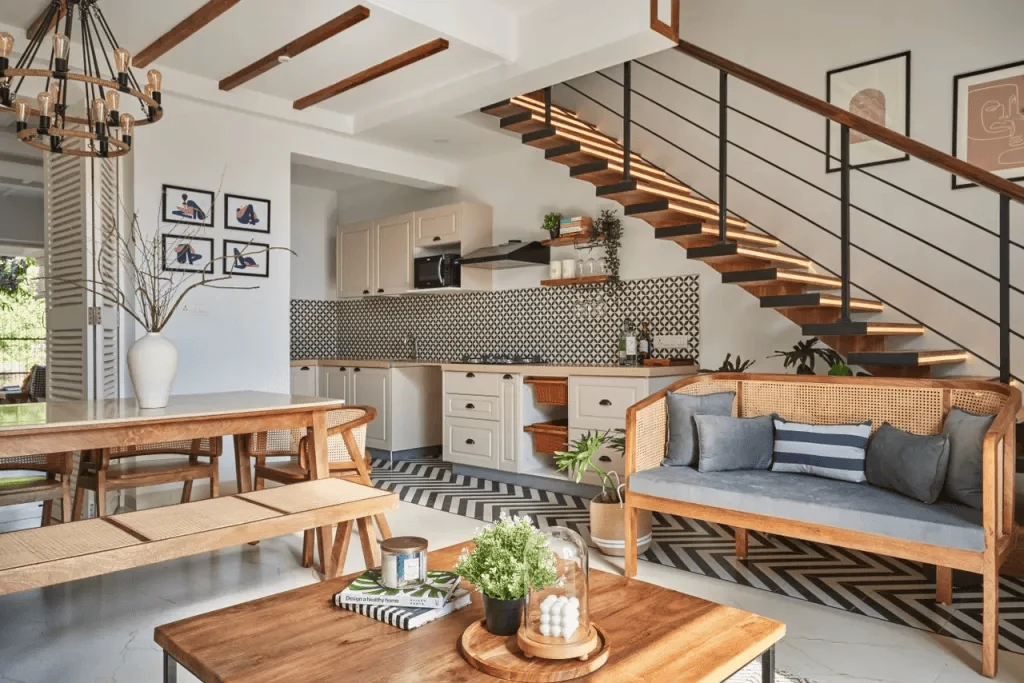
Scandinavian interior design style is often misread as minimalism with blonde wood. Its real discipline is harder: every element must justify itself. There is no ornament to hide behind, which means every joinery line, every shadow gap, every flooring board must be executed with near-cabinetry precision.
Design philosophy. Light, restraint, function rendered as quiet beauty. The style draws from a Nordic geography where winter days are short, so interiors are engineered to hold and reflect light. Surfaces stay pale. Forms stay calm.
Key materials. White-oiled oak or ash flooring, lime-washed walls, hand-finished plaster, natural linen, brushed brass in small doses, honed Carrara or Bianco Dolomiti for kitchens and bathrooms.
Signature fit-out elements. Continuous engineered oak flooring in 220mm to 300mm wide planks. Skirting reduced to a shadow gap or 50mm flush detail. Doors built floor-to-ceiling with concealed hinges. Kitchen joinery without handles, opening on push mechanisms. Plaster ceilings with no cornice, only a clean perimeter shadow line.
Craftsmanship requirements. Scandinavian is unforgiving. A 2mm gap in a flush skirting reads as a flaw. Flooring must be acclimatised for at least 14 days in Dubai’s controlled humidity before installation. Plaster work has nowhere to hide unevenness.
Suitability for Dubai luxury homes. Strong fit for villas with large glazed elevations, particularly in District One, Tilal Al Ghaf, and parts of Al Barari, where natural light is generous. Less suited to interior-facing rooms where the style can feel cold without careful warm-lighting strategy at 2700K to 3000K.
Maintenance and longevity. Oak floors require re-oiling every 18 to 30 months. Lime-washed walls resist marks but cannot be spot-touched without re-doing entire panels. The style ages gracefully but punishes neglect.
“Have nothing in your house that you do not know to be useful, or believe to be beautiful.” William Morris captured the principle Scandinavian design still operates by, more than a century later.
Art Deco Style Interior Design: The Geometry of Glamour
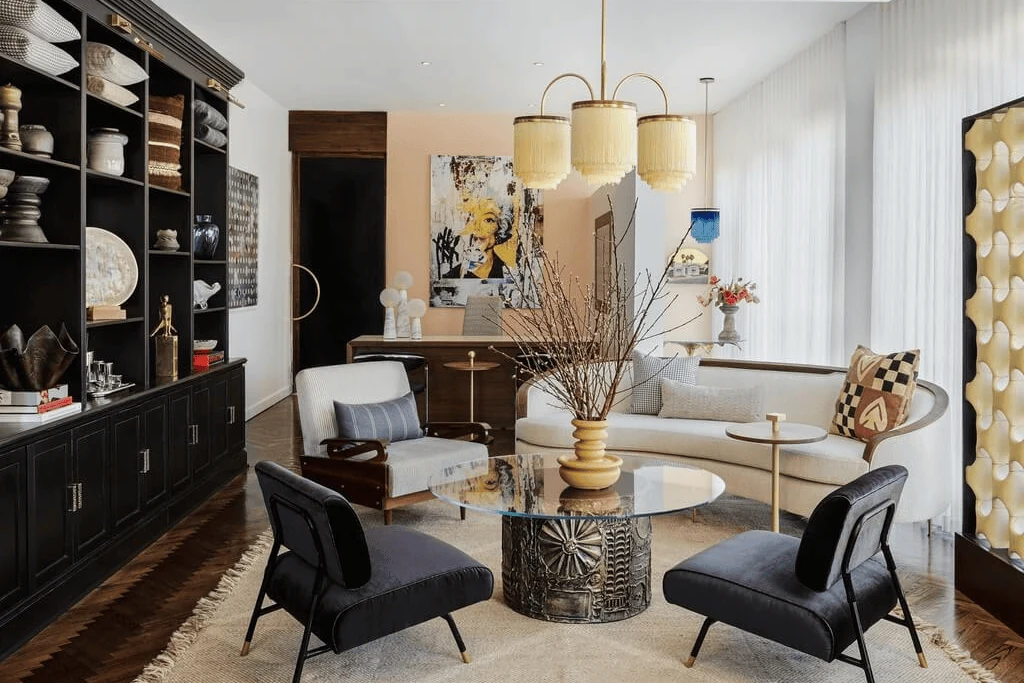
Art Deco style interior design emerged in 1920s Paris and reached its full architectural voice in the lobbies of New York and Miami. Today it returns to Dubai’s most ambitious residential interiors, particularly in penthouses along Bluewaters and Jumeirah Bay.
Design philosophy. Geometry as glamour. Symmetry, scale, lacquer, and metalwork combine in interiors that feel deliberate, theatrical, composed.
Key materials. Calacatta Viola, Nero Marquina, Verde Alpi, Macassar ebony, polished brass, antique mirror, lacquered timber, mother-of-pearl inlay, fluted glass, silk velvet.
Signature fit-out elements. Marble book-matching across four or eight slabs on accent walls. Brass inlay strips between stone joints, typically 6mm to 10mm wide. Lacquered joinery polished to a minimum of 90 sheen units. Sunburst, chevron, and fan motifs cut into stone or veneer. Curved walls with hand-applied Venetian plaster. Statement chandeliers that anchor double-height entrances.
Craftsmanship requirements. Among the highest in this guide. Stone book-matching alone requires slab selection at the quarry or stone yard, with veining mapped before cutting. Brass inlay must be set into pre-routed channels with thermal expansion accounted for. Lacquer work requires dust-controlled spray rooms, which most Dubai fabricators outsource to specialised facilities in Sharjah or Ajman.
Suitability for Dubai luxury homes. Exceptional fit for villas with ceiling heights above 3.6 metres and entrance halls of at least 60 sqm. Penthouses suit it particularly well. Smaller volumes risk visual heaviness.
Maintenance and longevity. Polished marble in high-traffic zones will dull over 3 to 5 years without professional re-honing. Brass tarnishes if unlacquered, which some homeowners prefer for patina; others request clear protective coatings re-applied every 5 to 7 years.
Industrial Style Interior Design: Honest Materials, Refined Execution
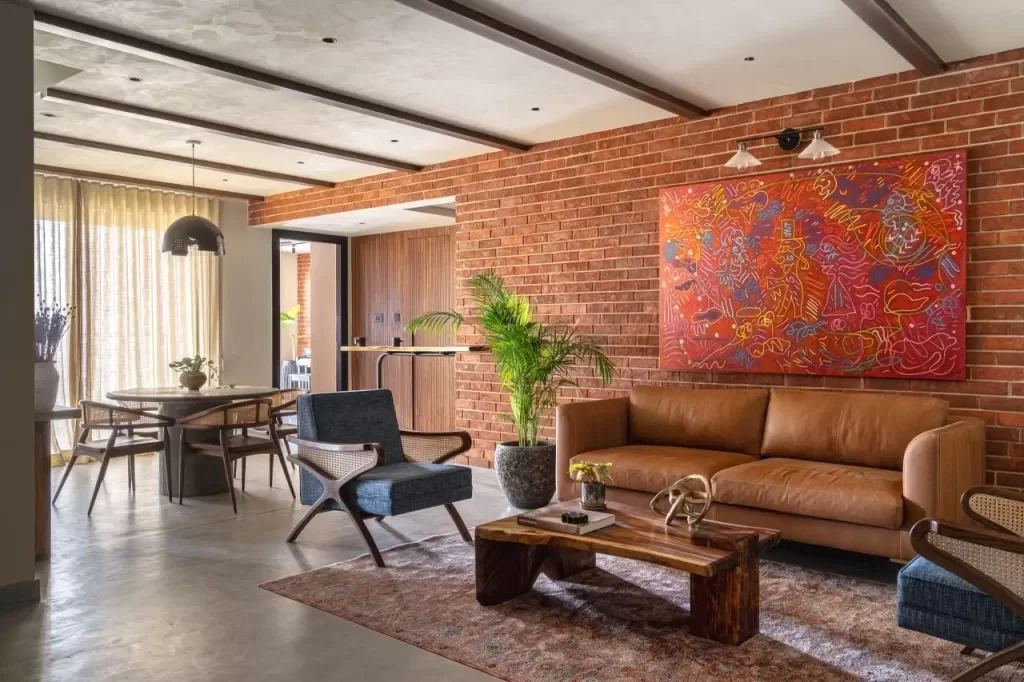
Industrial style interior design borrowed its language from converted warehouses in SoHo and Shoreditch. In luxury Dubai villas, the style is reinterpreted: the raw materials remain, but the execution is bespoke rather than salvaged.
Design philosophy. Material honesty. Structure exposed rather than concealed. Beauty in steel, concrete, and reclaimed wood, brought to a level of finish that reads as deliberate.
Key materials. Microcement, polished concrete, blackened steel, Corten, reclaimed oak, leather, smoked glass, raw brass, exposed brick, often imported reclaimed from European mills.
Signature fit-out elements. Crittall-style steel doors in 25mm to 40mm profiles, often spanning 3 to 5 metres. Microcement floors and walls in continuous pours. Pendant lighting on visible black cable. Open shelving in blackened steel and oak. Statement staircases with steel stringers and floating treads.
Craftsmanship requirements. Microcement is one of the most skill-dependent finishes in modern fit-outs. A 12mm system applied over three to five coats must be polished to avoid cracking, particularly across thermal-expansion zones common in Dubai villas. Crittall doors require precise structural openings and reinforced lintels.
Suitability for Dubai luxury homes. Increasingly popular in newer District 11 and Meydan villas, where modern architecture supports the language. Older Mediterranean-style shells in Emirates Hills typically resist it without major structural reframing.
Maintenance and longevity. Microcement is remarkably durable but shows hairline cracks at structural movement points. Steel must be sealed against humidity, particularly in coastal villas on Palm Jumeirah or Palm Jebel Ali, where salt air accelerates corrosion within 18 to 24 months if untreated.
Bohemian Style Interior Design: Layered, Collected, Personal
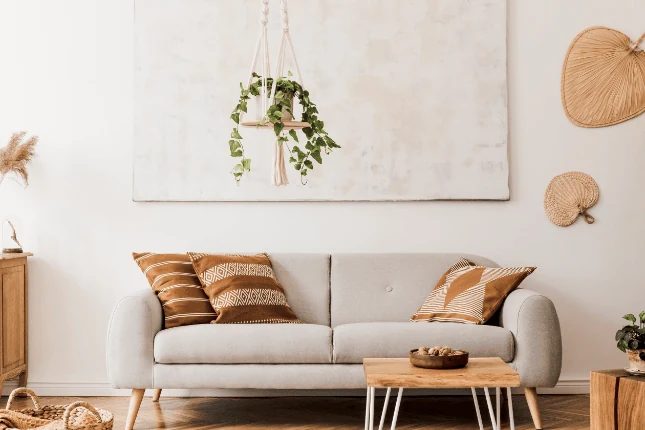
Bohemian style interior design at the luxury level is not the eclectic clutter of casual Pinterest boards. It is a sophisticated layering of textiles, artisanal objects, and global craft, executed with restraint and confidence.
Design philosophy. Curation over coordination. Interiors built around collected pieces from Marrakech, Jaipur, Oaxaca, and Istanbul, anchored by neutral architectural finishes that let the objects speak.
Key materials. Lime-washed plaster walls, terracotta or stone floors, hand-knotted wool and silk rugs, rattan, cane, aged brass, hand-blown glass, raw linen, reclaimed timber beams.
Signature fit-out elements. Plastered niches for sculpture and ceramic display. Arched doorways with hand-troweled finishes. Built-in banquettes with deep cushions. Custom joinery in natural finishes rather than lacquer. Layered lighting with table lamps, sconces, and floor lamps replacing recessed downlights.
Craftsmanship requirements. The architectural envelope must be quietly excellent. Plaster work, niches, and arches are all hand-formed. The collection layered into the space typically takes 6 to 18 months to build and is rarely sourced through a single supplier.
Suitability for Dubai luxury homes. Particularly strong for villas in Al Barari, Jumeirah Islands, and Arabian Ranches, where lower ceiling heights and intimate room proportions support the layered approach. Less suited to vast open-plan penthouses, where the style can read as undefined.
Maintenance and longevity. Textiles require rotation and professional cleaning. Natural finishes patinate beautifully if accepted on their own terms. Owners who want everything to look new five years on tend to be unhappy with this style; those who appreciate softness gained over time love it.
Mediterranean Interior Design Style: Sun, Stone, Patina
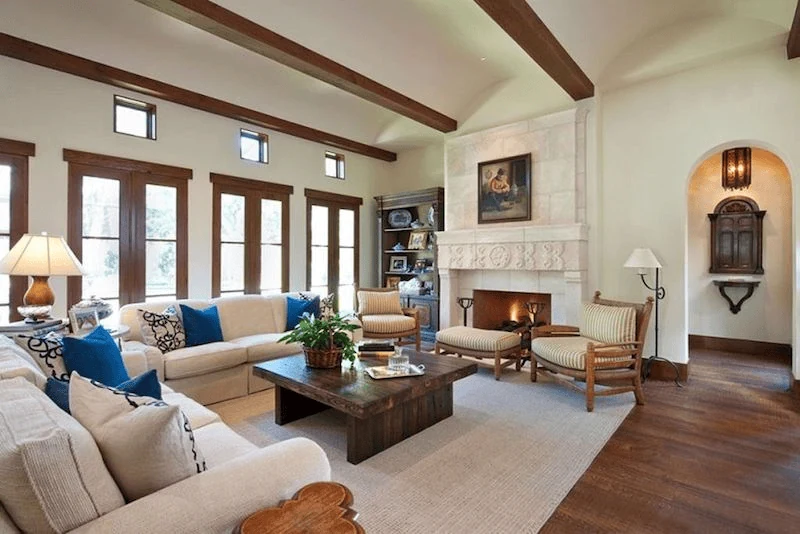
Mediterranean style interior design draws from the coastal architecture of Spain, southern France, Italy, and Greece. In Dubai, it has long been a foundational style for villas across Emirates Hills, Jumeirah, and parts of Al Barari, partly since the climate parallels the original.
Design philosophy. Interiors that breathe. Thick walls, deep window reveals, cool stone underfoot, and palettes drawn from olive groves, terracotta rooftops, and bleached coastal timber.
Key materials. Travertine, limestone, terracotta tiles, hand-troweled plaster, reclaimed oak beams, wrought iron, hand-painted ceramic tiles, natural sisal, raw linen.
Signature fit-out elements. Arched doorways and windows with deep 300mm to 450mm reveals. Travertine flooring in 600x600mm or 800x800mm slabs, vein-cut and book-matched. Hand-applied plaster on walls with subtle tonal variation. Wood-beamed ceilings, either structural or applied. Wrought iron balustrades on staircases and balconies.
Craftsmanship requirements. Plaster work is the heart of this style. Genuine Mediterranean plaster is built up in three to five layers with hand-troweled texture that cannot be replicated by spray application. Travertine must be filled and honed correctly, with filler colour-matched to each batch of stone.
Suitability for Dubai luxury homes. Among the most climate-compatible styles. The thermal mass of stone and plaster suits Dubai summers, and the visual palette feels natural rather than imported.
Maintenance and longevity. Travertine requires resealing every 2 to 4 years in wet zones. Hand-troweled plaster is remarkably forgiving and ages well over decades. Wood beams need inspection for termite activity every 18 months in Dubai’s older neighbourhoods.
Contemporary Interior Design Style: Disciplined Modern Luxury
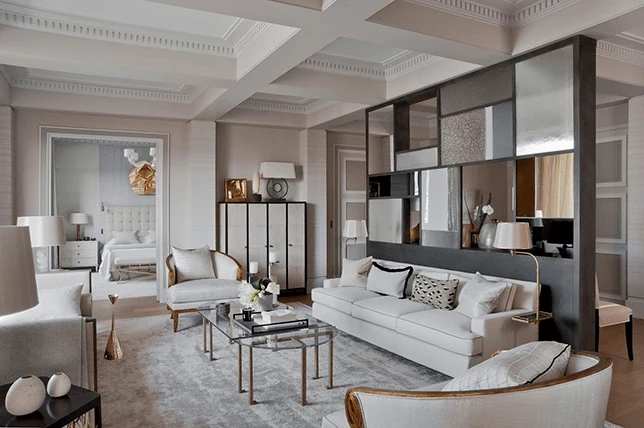
Contemporary interior design style is the language of much of new-build luxury Dubai. For homeowners looking for a refined residential concept, Euphoria interior can be a useful reference for contemporary spaces and tailored interior design.
It overlaps with modern minimalism but allows more warmth, more material variety, and more curated layering than strict minimalism permits.
Design philosophy. Architectural calm. Clean planes, generous proportions, restrained palettes, and curated furniture pieces that read as collected rather than catalogued.
Key materials. Large-format porcelain, often 1.2m x 2.7m slabs, book-matched marble accents, microcement, smoked oak, brushed brass, fluted timber, integrated LED profiles, low-iron glass.
Signature fit-out elements. Ceilings with continuous shadow gaps, fully concealed AC grilles, integrated cove lighting. Floor-to-ceiling joinery with concealed hinges and push-to-open systems. Floating vanities cantilevered up to 600mm. Large-format flooring with grout lines under 2mm. Statement single pieces of stone, often book-matched across walls measuring 4 to 7 metres wide.
Craftsmanship requirements. Tolerance discipline. Contemporary interiors live or die on millimetre precision. Joinery gaps must be consistent at 2mm to 3mm across runs of 8 to 12 metres. Ceiling lines must hold true without sag. Stone joints must align perfectly with joinery shadow gaps.
Suitability for Dubai luxury homes. The default style for new villas in District One, Tilal Al Ghaf, Bvlgari Residences, and many of the One at Palm Jumeirah units. Suits open-plan, glass-heavy modern architecture.
Maintenance and longevity. Among the most forgiving styles to live in. Porcelain and microcement are highly durable. The risk is dating: contemporary interiors specified to the trends of any given year often read as period pieces within 8 to 12 years.
Moroccan Style Interior Design: Geometry, Craft, Pattern
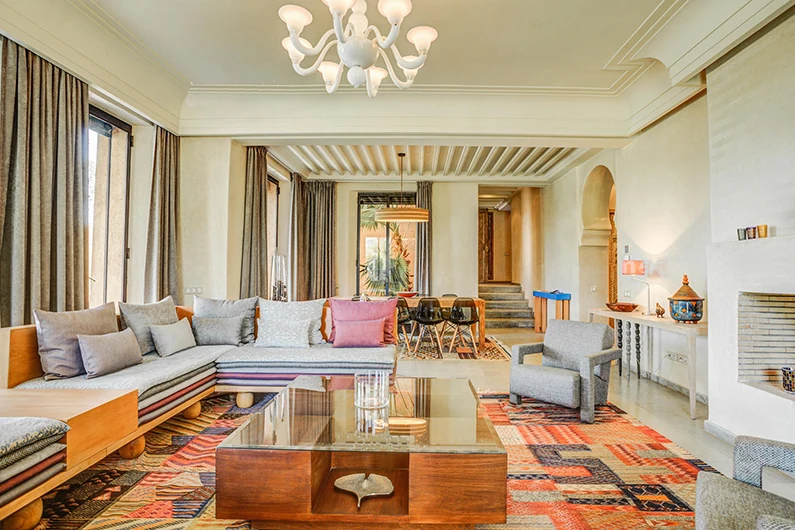
Moroccan style interior design is one of the most labour-intensive styles in this guide. Executed properly, it is a celebration of hand-craft that no machine has replicated.
Design philosophy. Geometry as devotion. Interiors built around hand-cut zellige tile, carved plaster in tadelakt and gebs, painted timber ceilings, and intricate lantern lighting.
Key materials. Zellige tile, genuinely hand-cut in Fez with tonal variation across batches, tadelakt plaster, hand-carved cedar zouak ceilings, brass and bronze lanterns, hand-knotted Berber rugs, marble or limestone fountains.
Signature fit-out elements. Zellige feature walls and floors. Tadelakt bathrooms polished to a soft, water-resistant sheen. Painted timber ceilings with geometric motifs. Carved plaster archways and mihrabs. Lantern lighting in bronze or pierced brass, often custom-commissioned.
Craftsmanship requirements. Moroccan style requires either bringing master craftsmen from Fez or Marrakech for 6 to 14 weeks on site, or partnering with the few Dubai-based ateliers who genuinely hold the skill. Tadelakt alone takes 7 to 12 days per zone to apply correctly, with daily polishing.
Suitability for Dubai luxury homes. Particularly suited to majlis areas, hammam rooms, and entertainment wings. Many Emirati and GCC homeowners commission Moroccan rooms within otherwise contemporary villas, allocating 40 to 120 sqm to the style.
Maintenance and longevity. Tadelakt, properly executed, lasts decades and improves with use. Zellige is highly durable but irregular in surface, which some owners find charming and others find difficult to clean. Carved cedar requires re-oiling every 3 to 5 years.
Italian Villa Style Interior Design: Old-World Architecture, Modern Comfort
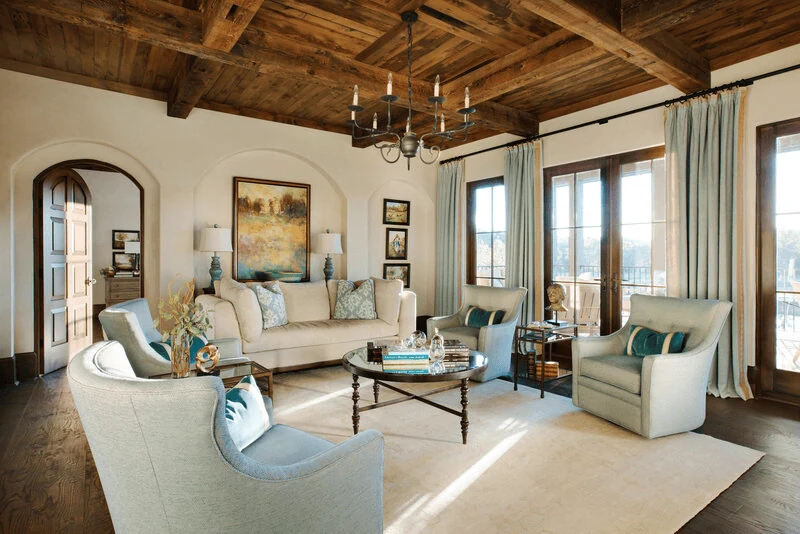
Italian Villa style interior design is the most natural fit for Dubai’s largest residential plots. It is the architectural language of Tuscan farmhouses, Roman palazzos, and Lake Como villas, scaled and adapted for contemporary family life.
Design philosophy. Substance and proportion. Interiors anchored by stone, plaster, and timber, designed to feel inherited rather than installed.
Key materials. Travertine, Pietra Serena, Carrara, hand-troweled lime plaster, reclaimed terracotta, solid oak and chestnut beams, hand-forged iron, antique mirror, raw linen, mohair velvet.
Signature fit-out elements. Vaulted and coffered ceilings with applied or structural beams. Travertine floors in vein-cut book-matched layouts. Plaster walls with hand-applied finishes ranging from smooth lime wash to textured marmorino. Custom kitchen joinery in solid oak with hand-aged iron hardware. Grand staircases with travertine treads and forged iron balustrades.
Craftsmanship requirements. Among the most demanding in any luxury fit-out. Coffered ceilings require precise carpentry, often in 600mm to 900mm grid spacing. Plaster work involves multiple specialised teams. Stone must be selected slab-by-slab, ideally with the homeowner or designer attending the stone yard in Carrara or Verona.
Suitability for Dubai luxury homes. The signature style of larger Emirates Hills, Jumeirah Golf Estates, and Dubai Hills villas, particularly those built on plots above 12,000 sqft. Suits double-height halls, expansive dining rooms, and formal majlis layouts.
Maintenance and longevity. Built to last generations when properly executed. Travertine and plaster age beautifully. Timber beams require periodic inspection. The style does not date, since it was never trendy to begin with.
The Italian architect Carlo Scarpa called architecture “a language that has to be learned slowly.” Italian Villa interiors are perhaps the clearest demonstration of that idea in residential design.
Italian Interior Design Style: Refined, Modern, Crafted
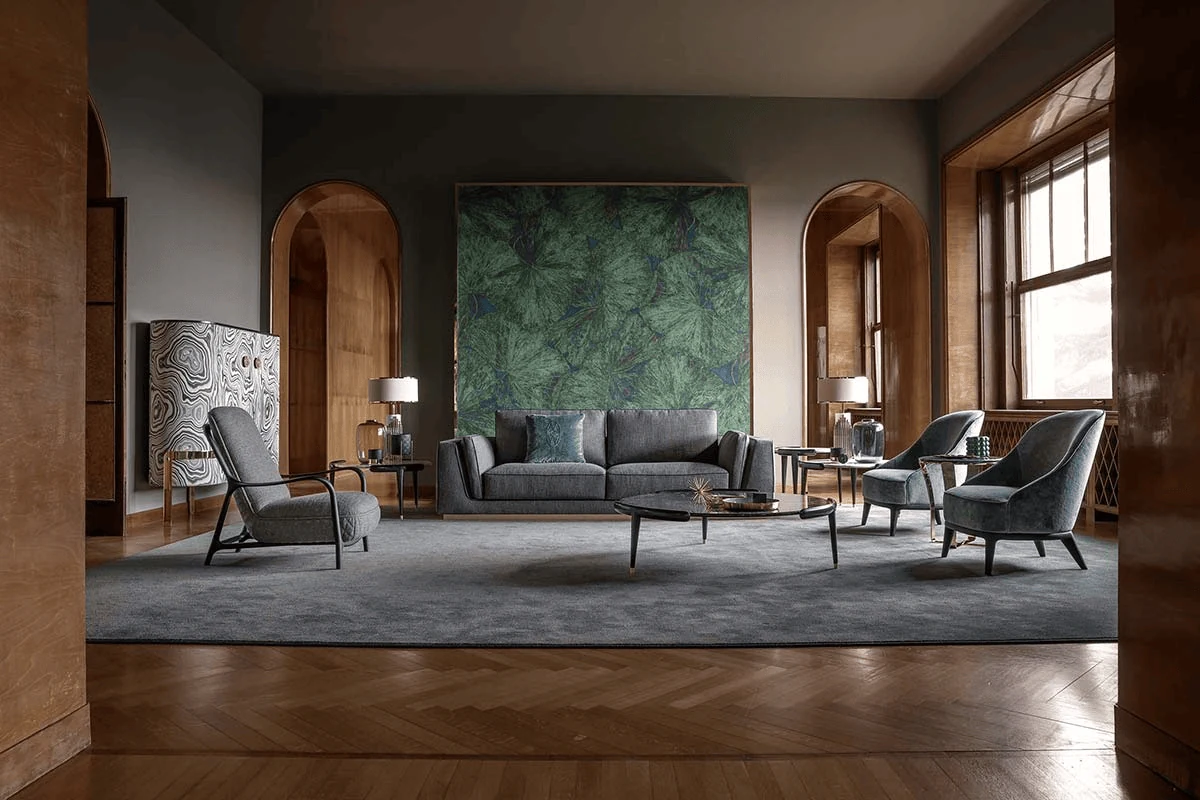
Italian interior design style, distinct from Italian Villa, refers to the modern Milanese tradition: the language of B&B Italia, Molteni, Poliform, Boffi. It is contemporary but deeply rooted in craft, with materials and detailing executed at a level few other countries match.
Design philosophy. Modern restraint backed by exceptional fabrication. The Italian school does not rely on ornament; it relies on proportion, material quality, and the integrity of every joint.
Key materials. Italian marbles such as Calacatta, Statuario, Travertino and Verde Guatemala, high-gloss lacquer, brushed and polished brass, smoked eucalyptus and walnut veneers, leather wall panels, fluted glass.
Signature fit-out elements. Imported full-room kitchen systems from Milan-based manufacturers. Floor-to-ceiling joinery with veneer book-matched across entire walls. Marble vanity blocks carved from single stone pieces. Integrated lighting in 5mm to 8mm aluminium profiles. Continuous timber flooring with no transitions across 200 to 400 sqm zones.
Craftsmanship requirements. Much of the joinery in true Italian interiors is fabricated in Italy and shipped to Dubai as completed kitchens, wardrobes, and wall systems. Site execution becomes assembly rather than fabrication, but the architectural envelope must be built to Italian tolerances, which are tighter than Dubai’s typical site standard.
Suitability for Dubai luxury homes. Strong fit for contemporary villas where the owner wants European fabrication quality without the historical weight of Italian Villa style. Common in District One, Bvlgari Residences, and Dorchester Collection villas.
Maintenance and longevity. Italian marble is the highest-quality stone available, but it is also the most demanding. Calacatta in a kitchen will mark from lemon, wine, and olive oil within months. Owners must accept patina or commit to professional restoration every 4 to 6 years.
Classical Style Interior Design: Architectural Heritage at Scale
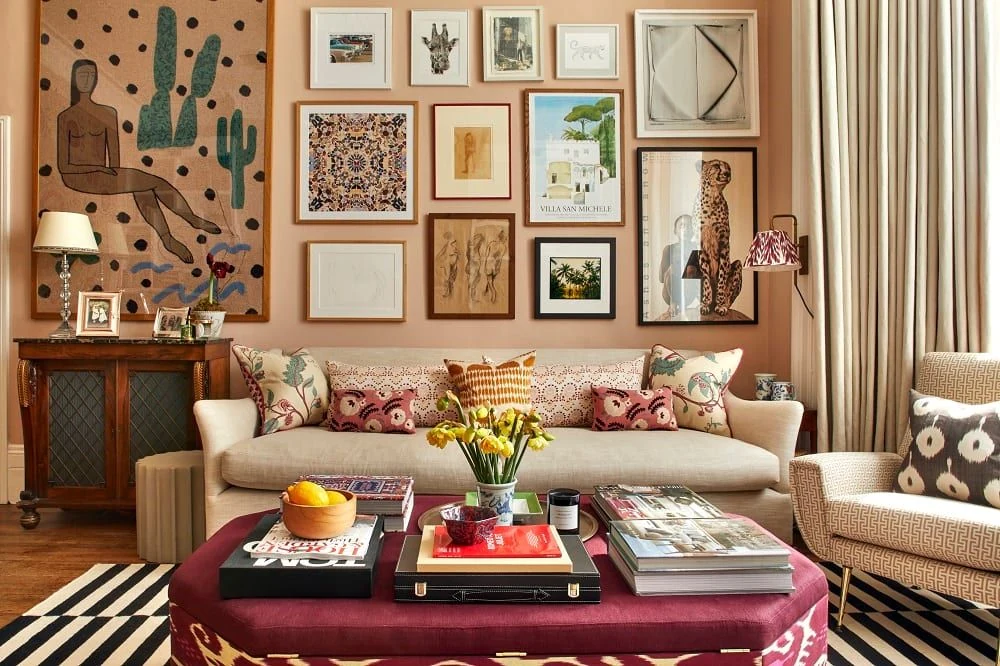
Classical style interior design draws on the Georgian, Beaux-Arts, and Italianate traditions. It is the language of European embassies, grand hotels, and old-money residences. In Dubai, it suits the largest villas where formality is part of the family’s lifestyle.
Design philosophy. Order, hierarchy, proportion. Rooms organised around symmetrical axes, with architectural ornament integral to the structure rather than applied as decoration.
Key materials. Marble, often Statuario, Calacatta Oro and Crema Marfil, gypsum plaster mouldings, hand-carved timber, gilded ornament, silk wall coverings, parquet flooring in Versailles or Chantilly pattern, antique mirror.
Signature fit-out elements. Full architraves, dado rails, and cornicing in correct classical proportion. Coffered or hand-painted ceilings with central rosettes. Marble fireplaces, often imported from Italian or English ateliers. Parquet flooring laid in geometric patterns. Hand-painted murals or scenic wallpaper from manufacturers like de Gournay or Zuber.
Craftsmanship requirements. Classical detailing demands plasterers, carvers, gilders, and painters who hold heritage skills. Cornice profiles must follow proper classical proportions, whether Tuscan, Doric, Ionic or Corinthian, rather than the simplified profiles common in standard fit-outs. A single hand-carved fireplace can take 8 to 14 weeks to fabricate.
Suitability for Dubai luxury homes. Suited to the largest formal villas in Emirates Hills, Al Barari, and Mohammed Bin Rashid City, particularly those above 15,000 sqft. The style demands ceiling heights of at least 3.5 metres in primary spaces.
Maintenance and longevity. Classical interiors are designed for permanence. Plaster mouldings last centuries. Marble fireplaces become heirlooms. The investment is upfront; running costs are modest if the work is done correctly.
Gothic Style Interior Design: Architecture as Drama
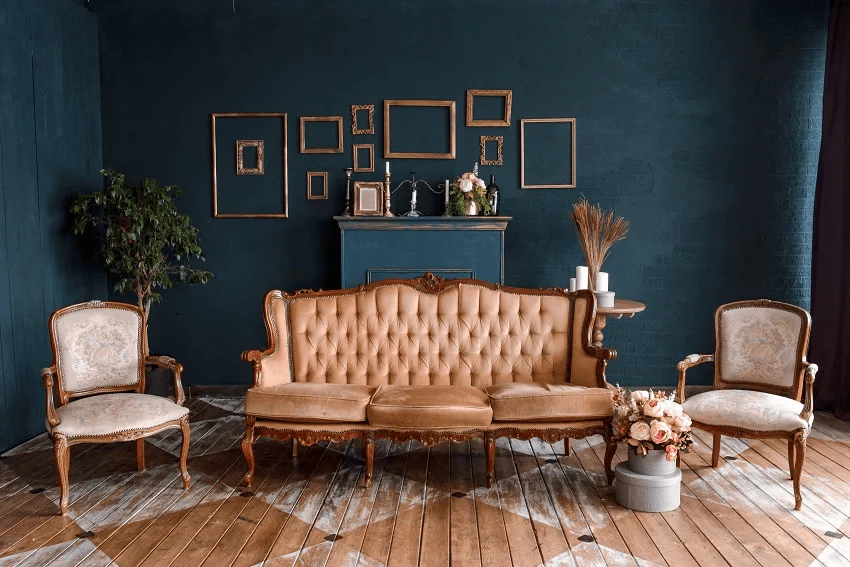
Gothic style interior design is the most architecturally ambitious style in this guide. It is rare in residential Dubai but appears in specialised projects: private chapels, library wings, wine cellars, and the occasional themed estate.
Design philosophy. Verticality, mystery, craftsmanship at its most exacting. Pointed arches, ribbed vaults, stained glass, and stone carving combine in interiors that feel ecclesiastical even at residential scale.
Key materials. Limestone, sandstone, oak, wrought iron, stained and leaded glass, hand-carved stone, heavy velvet and woven wall hangings, encaustic floor tiles.
Signature fit-out elements. Pointed arch doorways and windows. Ribbed vault ceilings, structural or applied. Stone tracery in windows. Carved stone fireplaces with hood detailing. Heavy oak doors with iron strap hinges. Leaded stained glass, often custom-designed and imported from European studios.
Craftsmanship requirements. Gothic style is the domain of specialist stone carvers, leadlight makers, and ironworkers, most of whom operate from workshops in the UK, France, Germany, or northern Italy. A single Gothic stone fireplace can require 4 to 6 months of fabrication. Stained glass commissions of meaningful size typically run 8 to 14 months.
Suitability for Dubai luxury homes. Rare and specialised. Most often commissioned for specific rooms such as a private chapel, a wine cellar or a games room, rather than entire villas. Some estate owners in Dubai Hills and Al Barari have built dedicated Gothic wings spanning 150 to 400 sqm.
Maintenance and longevity. Once installed, Gothic detailing is among the most durable in residential architecture. Stone outlasts the building. Leadlight requires re-leading every 80 to 120 years. The investment is generational.
Hampton Style Interior Design: Coastal Calm with Polished Joinery
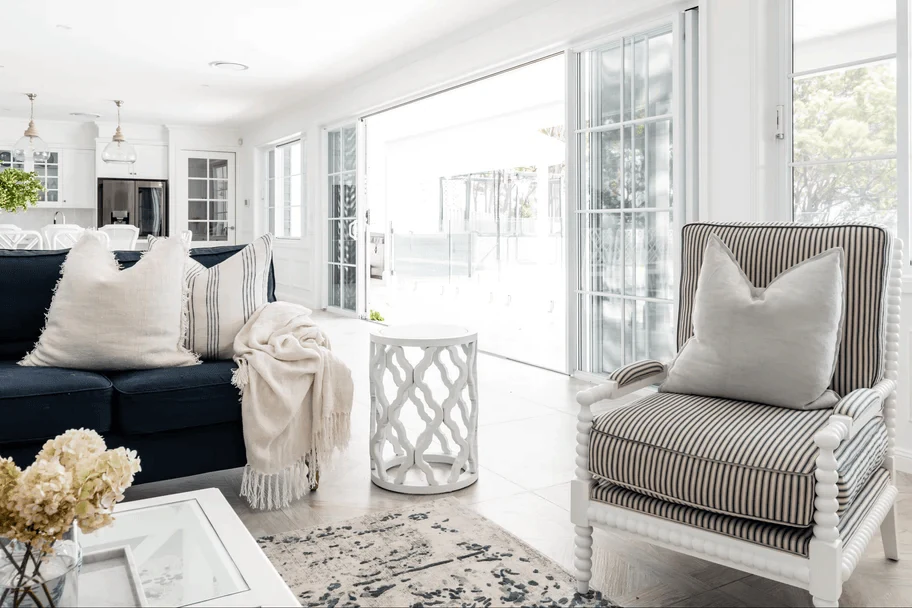
Hamptons style interior design takes its name from the coastal Long Island summer residences of America’s old families. It has been embraced in Dubai for waterfront villas on the Palms and in Dubai Marina mansions.
Design philosophy. Relaxed coastal sophistication. White-painted timber, soft natural fabrics, layered neutrals, and an architectural language built around panelling, shutters, and timber detailing.
Key materials. Painted timber panelling in V-groove, beadboard and raised-panel profiles, wide-plank oak flooring often white-washed, natural stone tops, linen and cotton textiles, polished nickel or brushed brass hardware, sisal and seagrass rugs.
Signature fit-out elements. Full-height wall panelling in painted timber. Coffered or beamed ceilings in painted timber. Wide-plank oak flooring at 240mm to 320mm widths. Painted kitchen joinery with Shaker-style doors. Plantation shutters on windows. Glazed internal doors with multiple panes.
Craftsmanship requirements. Timber painting at this level is its own discipline. Panels must be primed, sanded, primed again, and finished with a minimum of three top coats, ideally hand-laid with brush rather than spray for the soft, slightly worked finish that defines the style. Joints must be invisible.
Suitability for Dubai luxury homes. Strong fit for Palm Jumeirah villas, particularly the Frond villas with direct beach access. Also suited to waterfront mansions in District One and lakefront villas in Tilal Al Ghaf. Climate-compatible if the timber is properly specified and sealed.
Maintenance and longevity. Painted timber will need touch-ups every 4 to 7 years, with full repainting at 12 to 15 years. Wide-plank oak in coastal humidity requires careful sealing. The style’s casual softness ages well; chips and scuffs read as character rather than damage.
Cottage Style Interior Design: Intimate Scale, Considered Detail
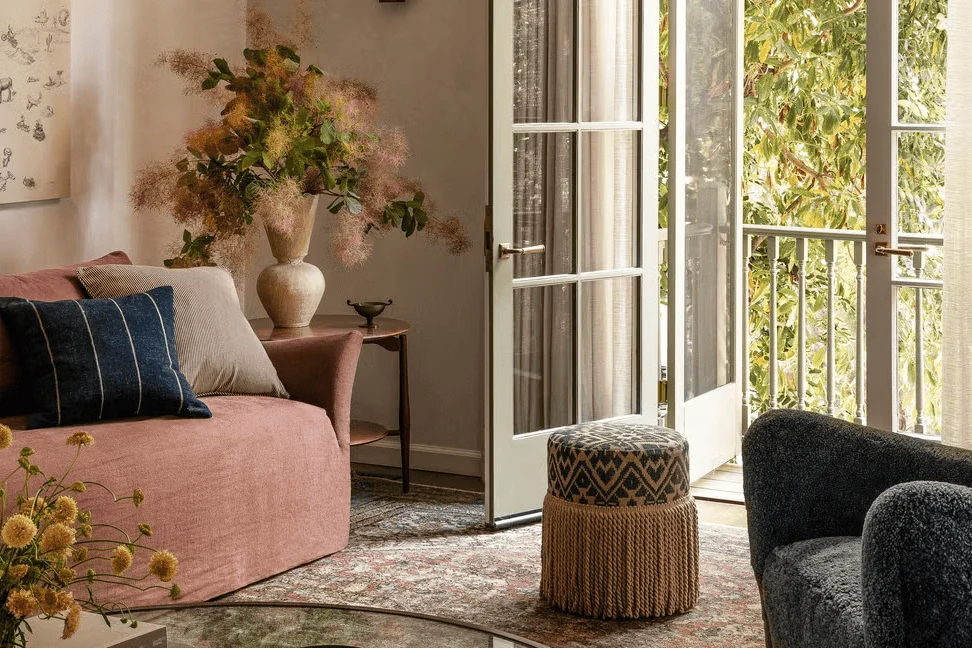
Cottage style interior design at the luxury level is rare in Dubai but exists in pockets: guest cottages within larger estates, weekend houses in Hatta, and selected villas in older Jumeirah neighbourhoods where the architecture supports the scale.
Design philosophy. Intimacy, warmth, layered domesticity. Interiors built around exposed structural elements, hand-painted finishes, and a softer, more domestic palette than the grander styles.
Key materials. Reclaimed oak beams, lime-washed brick, painted timber floors or wide-plank oak, hand-painted wall finishes, vintage tile, antique hardware, mixed textiles in linen, wool, and printed cotton.
Signature fit-out elements. Exposed timber beams, structural or applied. Painted timber floors in soft greys, whites, or muted greens. Built-in window seats with cushioned tops. Painted kitchen joinery with open shelving. Brick or stone fireplaces with timber mantels.
Craftsmanship requirements. Cottage style requires craftsmen comfortable with handworked finishes that read as imperfect by design. The discipline is harder than it looks: deliberately uneven plaster, hand-painted floors, and aged timber must avoid looking sloppy. The line between charming and clumsy is thin.
Suitability for Dubai luxury homes. Best suited to secondary residences, guest cottages, and selected smaller villas. Rarely the right choice for a main 12,000 sqft villa, where the scale fights the style.
Maintenance and longevity. Painted floors require re-painting every 5 to 8 years in high-traffic zones. Lime-washed brick is stable but cannot be sponge-cleaned without leaving marks. The style accepts wear gracefully.
Retro Style Interior Design: Mid-Century with Contemporary Discipline
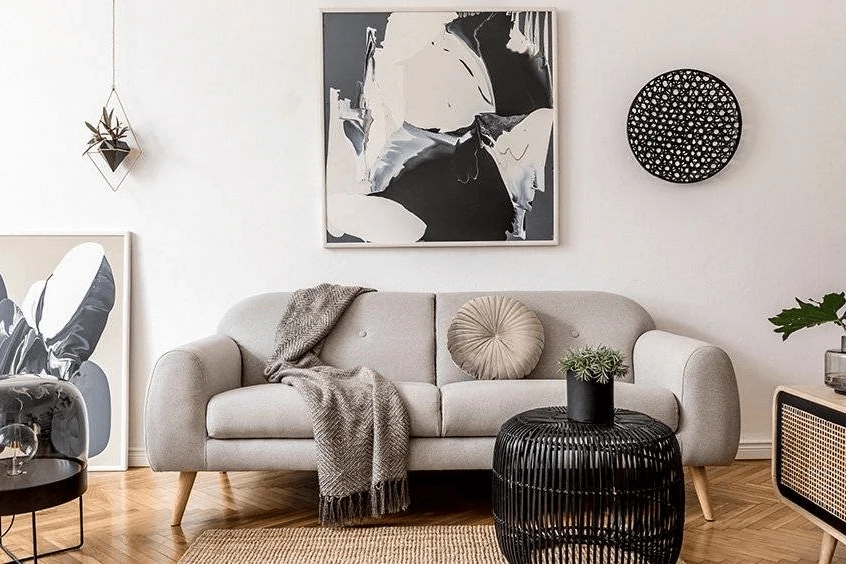
Retro style interior design at the luxury level usually means mid-century modern, the architectural and furniture language of the 1950s and 1960s, executed with current fabrication quality.
Design philosophy. Sculptural form, optimism, and warm materials. Curved walls, statement furniture, terrazzo and travertine surfaces, and a richer colour palette than contemporary minimalism allows.
Key materials. Walnut and teak veneer, terrazzo, travertine, bouclé and velvet upholstery, brass and bronze, smoked glass, lacquered timber in deep colours such as forest, ochre and terracotta, patterned area rugs.
Signature fit-out elements. Curved walls and joinery. Terrazzo floors and vanity surfaces. Sunken seating areas with built-in banquettes. Walnut veneer joinery, often book-matched. Statement lighting in brass and smoked glass. Built-in bars in lacquered timber.
Craftsmanship requirements. Curved joinery is significantly more demanding than straight. Veneers must be steam-bent or laid on curved substrates with vacuum-pressing. Terrazzo, when poured in situ, requires 3 to 6 weeks of curing and polishing.
Suitability for Dubai luxury homes. Particularly well-suited to penthouses and apartment fit-outs in Dubai Marina, City Walk, and Downtown. In villas, often appears in entertainment wings, bars, and lounge areas rather than throughout the home.
Maintenance and longevity. Walnut veneer is sensitive to direct sunlight and will fade over 8 to 12 years if not protected by UV-filtering glazing. Terrazzo is exceptionally durable. The style ages well, rooted in genuine mid-century design rather than recent trends.
Spanish Style Interior Design: Andalusian Warmth, Modern Comfort
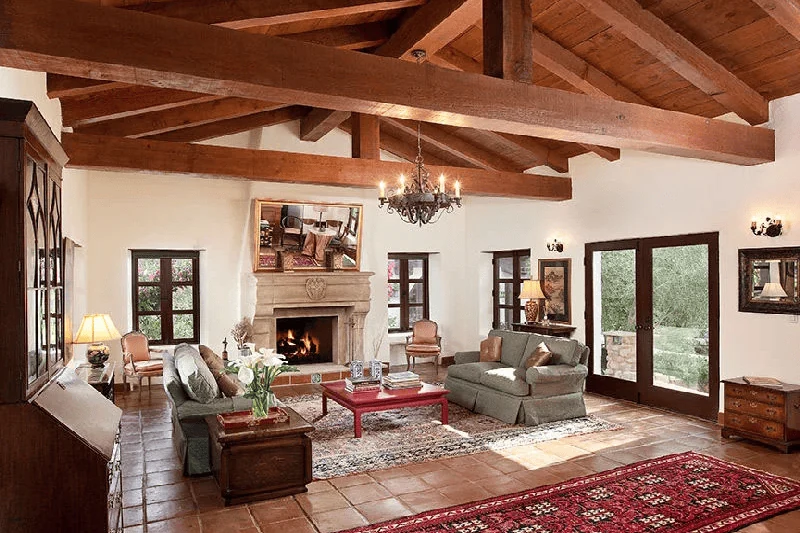
Spanish style interior design overlaps with Mediterranean but holds its own distinct character, drawn from Andalusian and Moorish-influenced architecture in southern Spain.
Design philosophy. Warmth, texture, courtyard-centric living. Interiors organised around natural light filtered through arched openings, with rich material layering and a more saturated palette than Italian Mediterranean.
Key materials. Terracotta tile, hand-painted ceramic in Talavera and Sevillian traditions, wrought iron, dark stained oak, lime-washed walls in warm white and ochre, wool flatweave rugs, hand-carved timber.
Signature fit-out elements. Arched doorways, often horseshoe-shaped, reflecting Moorish influence. Terracotta floors with hand-painted ceramic insets. Wrought iron balustrades, light fixtures, and window grilles. Wood-beamed ceilings, often darker than Italian equivalents. Hand-painted tile in kitchens and bathrooms.
Craftsmanship requirements. Authentic hand-painted ceramic is genuinely hand-painted, with tonal variation across each piece. Sourcing from Sevilla, Granada, or Talavera typically adds 12 to 20 weeks to project timelines. Wrought iron must be hand-forged rather than cast.
Suitability for Dubai luxury homes. Well-suited to villas in Arabian Ranches, Jumeirah Islands, and Emirates Hills, where the architecture often already carries Mediterranean influence. The warmer palette suits Dubai’s light particularly well.
Maintenance and longevity. Terracotta requires sealing every 2 to 3 years and develops patina that improves with age. Hand-painted ceramic is durable but cannot be matched if individual pieces break, so spares should be ordered at 10 to 15 per cent of the original quantity.
How to Choose the Right Interior Design Style for Your Villa
The question is rarely “which style is best.” It is “which style fits this villa, this family, this plot, this climate, this lifestyle, and this 20-year horizon.”
A few questions worth holding in mind:
What is the architecture asking for? A modern villa in District One with floor-to-ceiling glazing resists Classical detailing the way a Tuscan farmhouse resists fluorescent lighting. Style should respond to architecture, not fight it.
What ceiling heights do you have? Styles like Art Deco, Italian Villa, Classical, and Gothic need ceilings above 3.5 metres to read correctly. Scandinavian, Contemporary, and Industrial work comfortably at 2.9 to 3.3 metres.
How do you actually live? Formal entertaining suggests Classical or Italian Villa. Indoor-outdoor family living suits Mediterranean, Spanish, or Hamptons. Quiet daily life with occasional guests aligns with Scandinavian or Contemporary.
What is your relationship with patina? Italian marble, hand-troweled plaster, painted timber, and natural oak all change over time. If you want the villa to look identical in year ten as in year one, choose porcelain, microcement, and engineered finishes.
What is your fit-out timeline? Styles dependent on imported European fabrication, including Italian, Italian Villa, Classical, Gothic and true Moroccan, typically extend project timelines by 4 to 8 months over contemporary fit-outs.
Once the style is settled, the next decision is who executes it, since craftsmanship intensity varies enormously across the styles above. Our guide on how to choose a fit out company sets out the checks worth running before you appoint anyone, and our completed luxury fit-out projects show several of these styles built out in Dubai villas.
Table 2: Style Compatibility with Dubai Villa Typologies
| Villa Typology | Best-Fit Styles | Less Suitable |
|---|---|---|
| Modern glass villa (District One, Tilal Al Ghaf) | Contemporary, Italian, Industrial, Scandinavian | Gothic, Classical, Cottage |
| Mediterranean shell (Emirates Hills, Arabian Ranches) | Italian Villa, Mediterranean, Spanish, Hamptons | Industrial, Retro |
| Beachfront (Palm Jumeirah, Palm Jebel Ali) | Hamptons, Mediterranean, Contemporary | Gothic, Classical |
| Penthouse (Downtown, Bluewaters) | Art Deco, Contemporary, Italian, Retro | Italian Villa, Cottage |
| Formal estate (Emirates Hills, Al Barari, MBR City) | Italian Villa, Classical, Art Deco, Gothic wings | Industrial, Cottage |
Key Takeaways
- Interior design styles operate as systems, not surfaces. They shape every layer of a fit-out: structural, material, lighting, joinery, and ongoing maintenance.
- Craftsmanship intensity varies dramatically by style. Classical, Gothic, Art Deco, Italian Villa, and Moroccan demand the highest skilled labour input. Scandinavian, Contemporary, and Industrial demand the highest tolerance precision.
- Climate compatibility favours stone-and-plaster styles such as Italian Villa, Mediterranean, Spanish and Moroccan in Dubai. Timber-heavy styles including Hamptons, Cottage and Industrial require careful specification.
- Patina is a feature, not a flaw, in heritage-rooted styles. Owners must accept it or choose styles built around engineered finishes.
- Style should respond to architecture, ceiling height, and lifestyle. Imposing a style against the architecture is the most common source of fit-out compromise.
- Imported European fabrication, common in higher styles, typically extends timelines by 4 to 8 months and budgets by 15 to 35 per cent.
Frequently Asked Questions
What is the most popular interior design style in Dubai luxury villas right now?
Contemporary remains the most commissioned style in new-build Dubai villas, particularly in District One, Tilal Al Ghaf, and the newer Dubai Hills releases. Italian Villa and Italian, meaning Milanese modern, follow closely for larger plots. Hamptons has grown significantly on the Palms over the last 5 to 7 years.
Which interior design style ages best in Dubai’s climate?
Italian Villa, Mediterranean, and Spanish styles are exceptionally well-suited to Dubai’s climate, since their material palette of stone, plaster, terracotta and timber beams parallels the climate of origin. Contemporary fit-outs using high-quality porcelain and engineered timber also age well technically, though they can date stylistically.
Can I mix interior design styles in one villa?
Yes, and the most sophisticated Dubai villas often do. Common combinations include a Contemporary main living area with an Italian Villa formal dining room, a Moroccan majlis, and a Hamptons family wing. The key is architectural coherence at the threshold points between styles, which requires careful planning at the design stage.
What is the difference between Italian and Italian Villa style?
Italian style refers to the modern Milanese tradition of B&B Italia, Molteni and Poliform: clean lines, exceptional fabrication, contemporary palette. Italian Villa refers to the historical residential architecture of Tuscany, Lombardy, and Rome: stone floors, plaster walls, timber beams, classical proportion. The two styles can coexist within one home but represent different design languages.
A Closing Thought
The styles in this guide are not preferences. They are commitments. Each one will shape your villa’s material, joinery, ceiling, lighting, and maintenance reality for as long as you live there, and for the family that inherits it after.
The best luxury fit-outs are the ones where style, architecture, lifestyle, and craftsmanship align. When that alignment happens, the villa stops feeling decorated and starts feeling inevitable. Every cornice belongs where it sits. Every stone reveals the right vein at the right joint. Every door closes with the right weight.
That is the standard worth holding any fit-out to. Whichever style speaks to you, choose it the way you would choose a piece of architecture: for what it will ask of the craftsmen who build it, and for what it will give back, quietly, every day, for the next 30 years. Getting there depends on the team you appoint, and our guide to choosing a fitout company in Dubai covers the scope, approvals and quotation checks worth running first.
Planning a villa fit-out in one of these styles? Book a project consultation to discuss your architecture, material palette, joinery scope and timeline with our team.