


You send the same Dubai project to three companies, but each quotation comes back with a different total. One omits approvals, one leaves materials vague, and one promises handover without showing the programme. Choosing a fitout company in Dubai becomes difficult because the prices may not cover the same work.
You need a clear price, buildable design and one person answerable for delivery. This helps you open or move in on time.
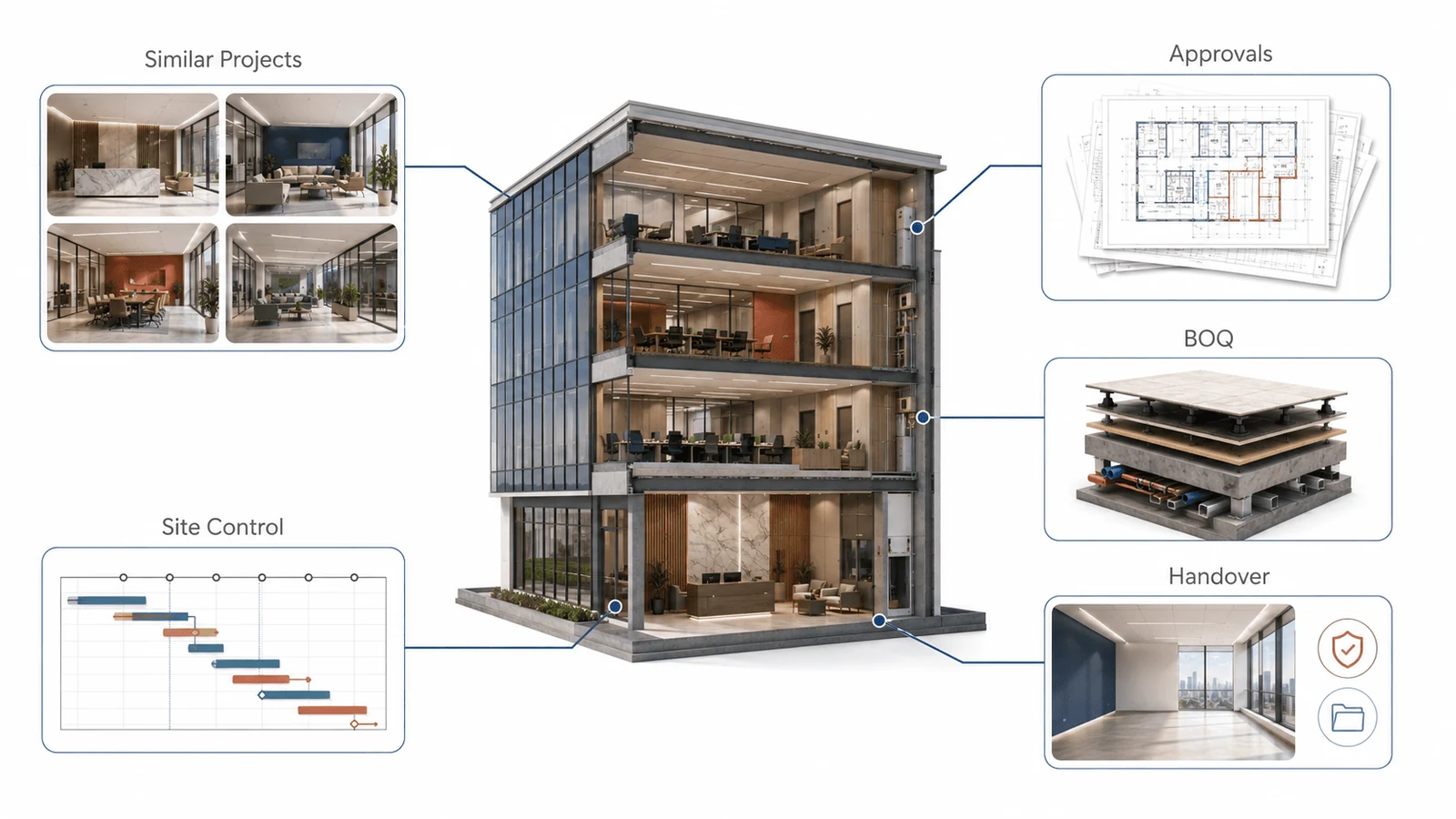
Before you choose, look for relevant projects, an itemised scope, named materials, an approval plan and written project controls.
Keep reading to learn what a fit-out company should handle and how to check its proof before paying a deposit.
First Find Out What a Fitout Company in Dubai Will Do
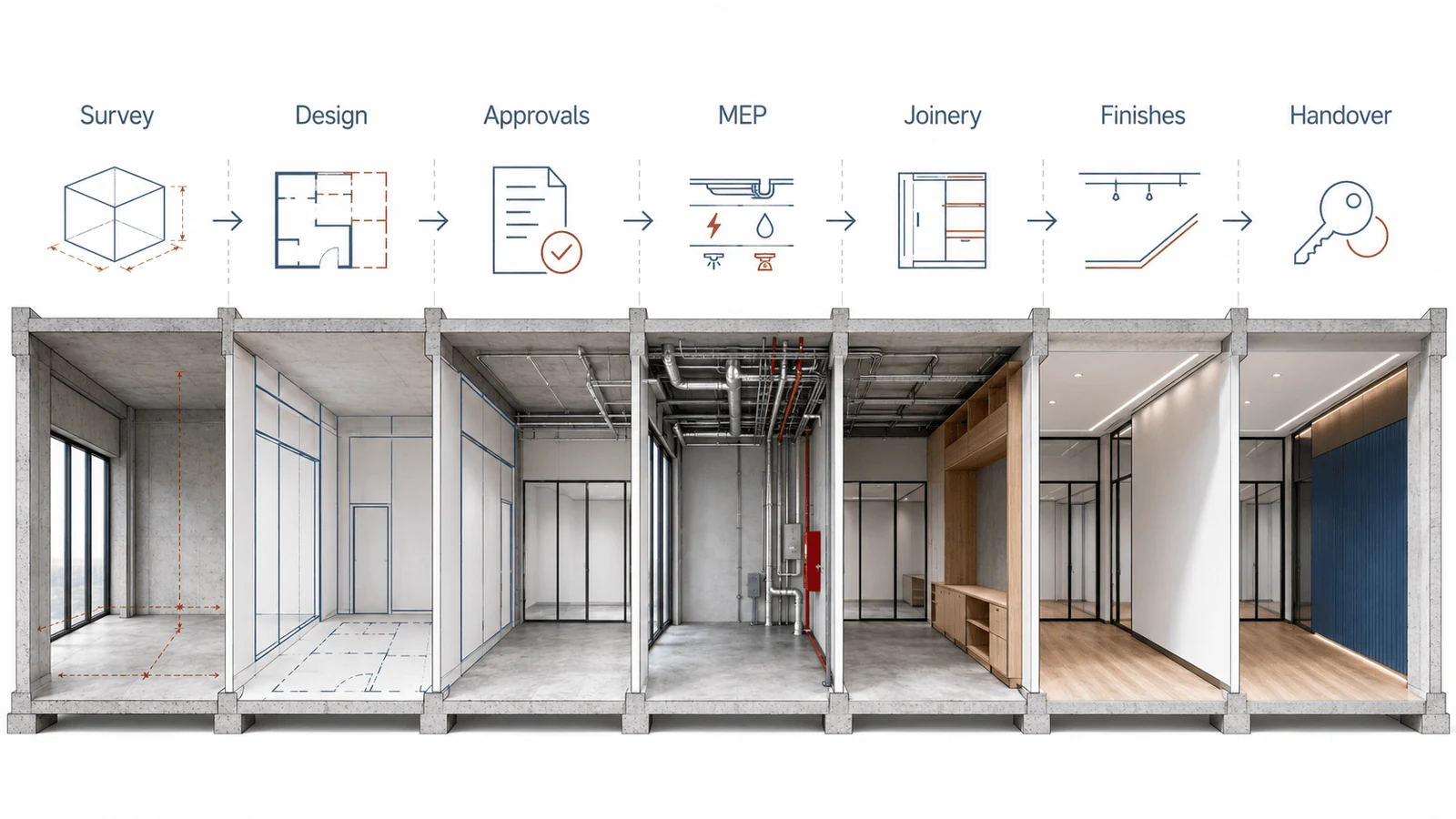
A fit-out company turns an empty or existing interior into a usable space. Its scope may cover design, approvals, MEP, flooring, lighting, joinery and furniture installation.
That list changes with the property. An office needs data points, acoustics and meeting-room privacy. A restaurant may need kitchen extraction, drainage and a clear service route. In a villa, bathrooms, wardrobes and family routines shape the work.
Some firms build from drawings prepared by another consultant. Others provide complete fit-out services in Dubai from survey through snagging. Before comparing prices, write down exactly what you expect the company to manage.
Choose a Delivery Model That Fits Your Starting Point
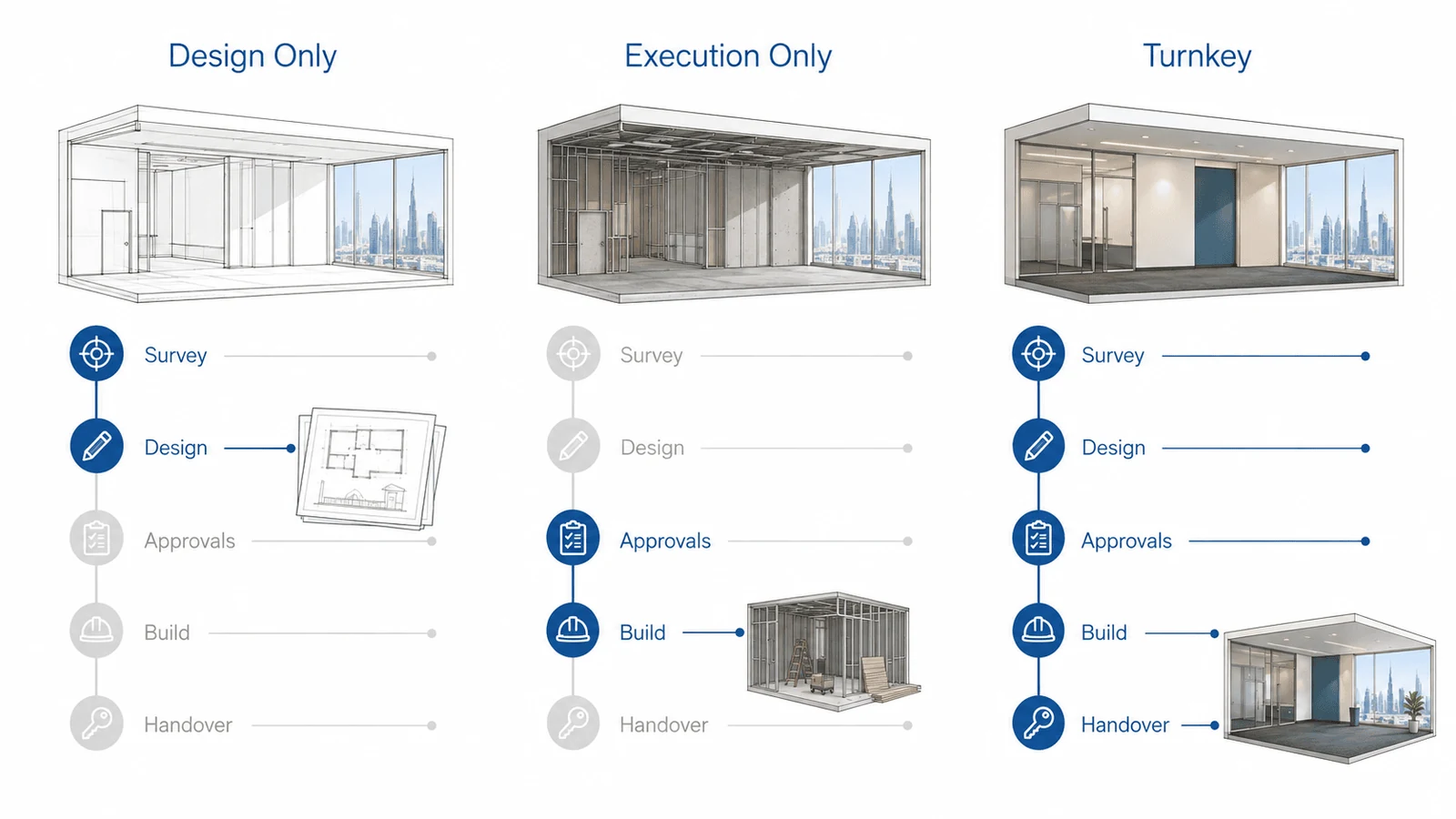
Once the scope is clear, match the delivery model to the drawings and approvals you have.
- A design-only studio prepares layouts, concepts, material details and technical drawings.
- An execution-only contractor builds from a finished and approved design package.
- A turnkey company manages the design, approvals, procurement, site work and handover.
Already have complete drawings? Execution-only work may suit the project, but an unfinished idea still needs technical development before anyone starts building.
A team providing commercial interior design services can turn staff numbers, storage needs, customer routes and technical loads into drawings. The estimator can then price work that the site team can build.
Check Similar Interior Fit-Out Projects
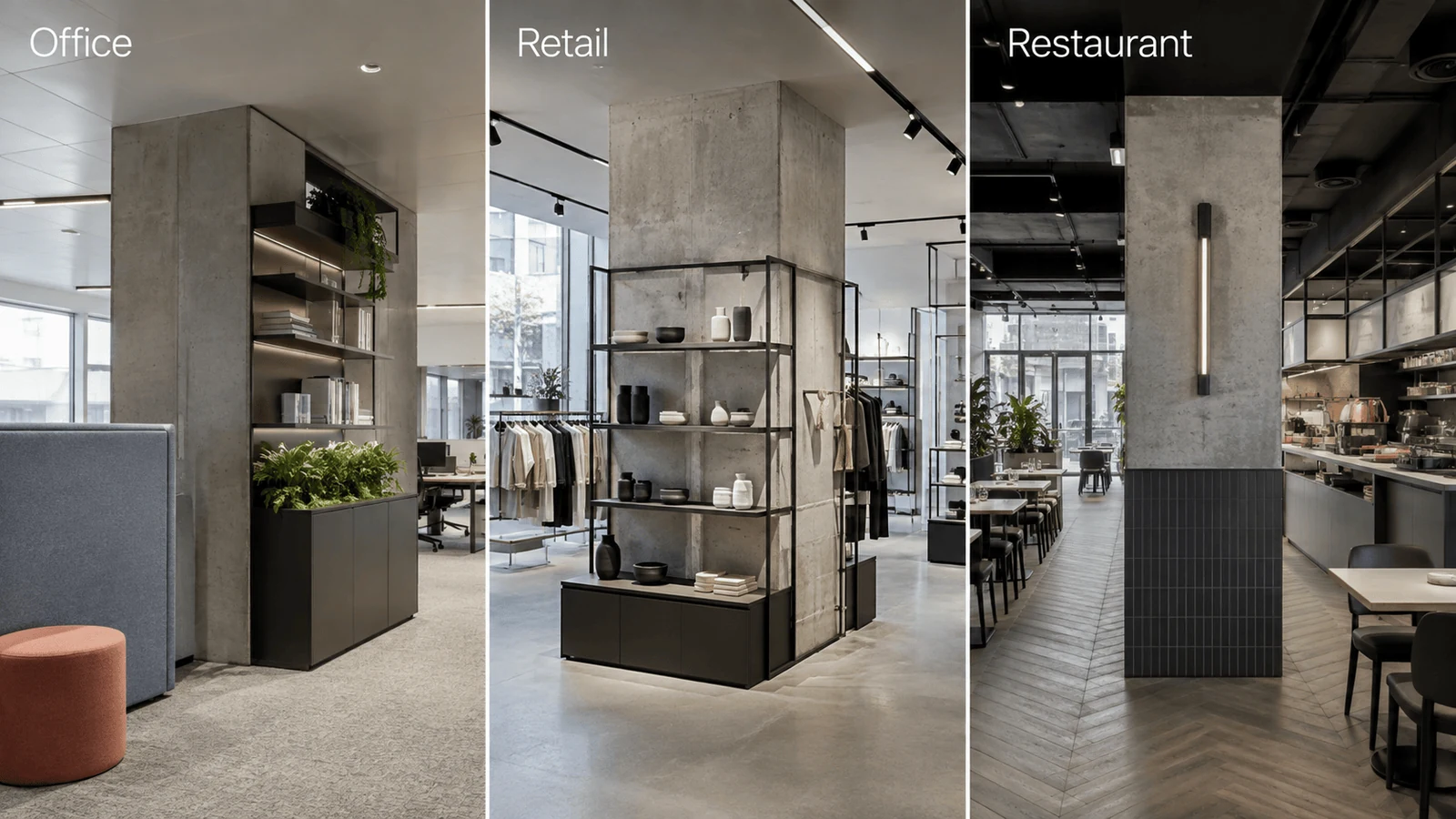
A fitout company in Dubai may group offices, villas, cafés and shops in its project portfolio. Your shortlist needs proof related to your own project.
Ask for projects with a similar use, size, budget and technical difficulty. Then find out what the company handled. Did its team design the space, obtain approvals and complete the work, or did it supervise someone else?
Each portfolio entry should state the location, completion date and work the company handled. If those details are missing, ask for them before treating the project as relevant proof.
Try to see one finished project and one active site. At the finished space, check doors, cabinets, tiles and access panels. At the active site, look at floor protection, material storage, daily supervision and general order.
Inspect Fit-Out Work Beyond Finished Photographs
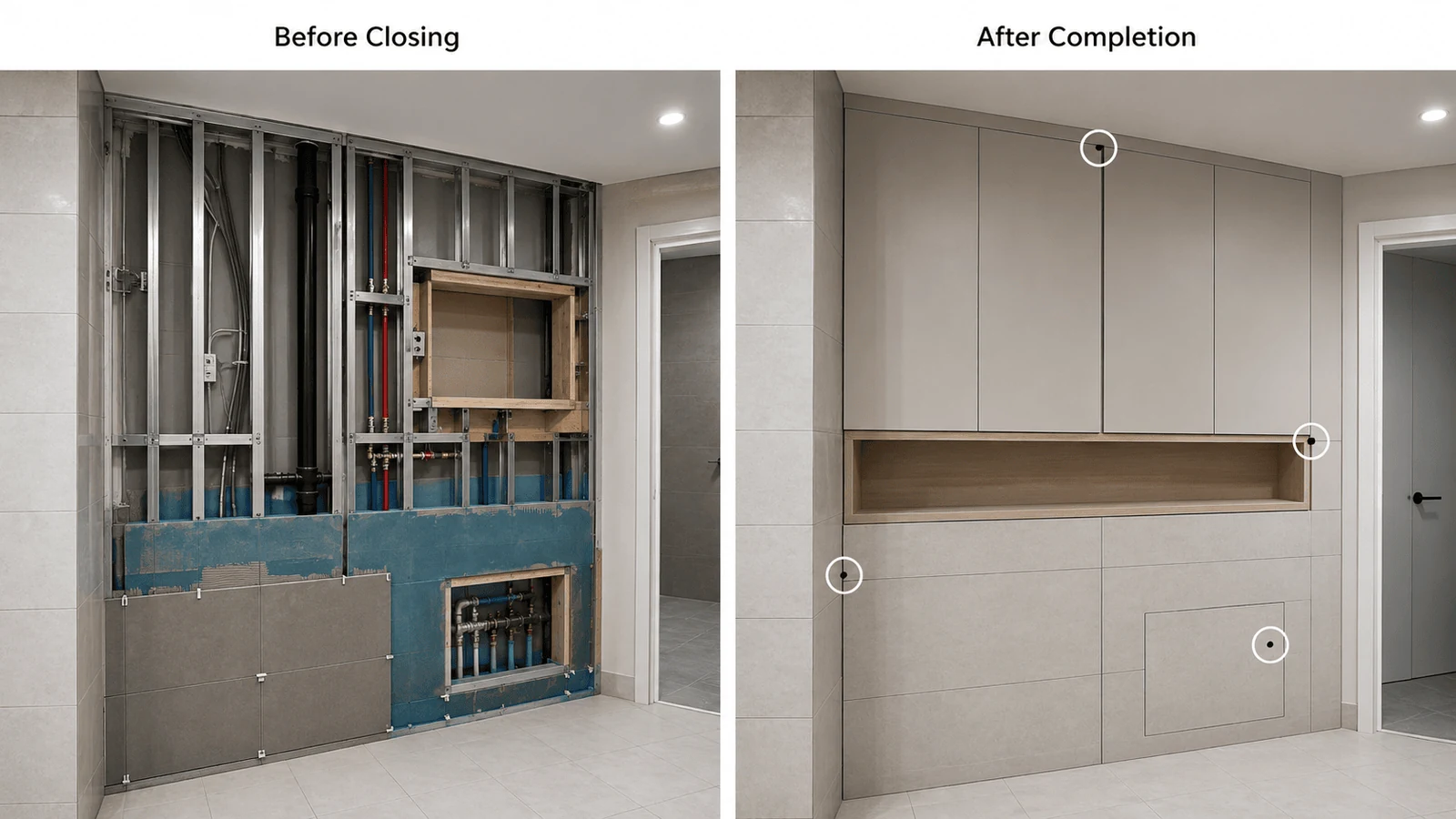
Once you find a relevant project, zoom in on cabinet lines, tile joints, door gaps, ceiling edges and access panels. These details can reveal rushed work.
Progress images taken before ceilings and walls close can reveal more. Ask to see MEP installation, waterproofing, joinery production and snagging records because much of this work later disappears.
Call an earlier client and ask about the final cost, project updates and the time taken to close snags. Also ask how the space has held up since handover.
A polished handover photograph will not show a blocked access panel or cabinet hardware that loosens later. Feedback after six months or a year gives you a better view of the workmanship.
Confirm the Dubai Fit-Out Approval Route
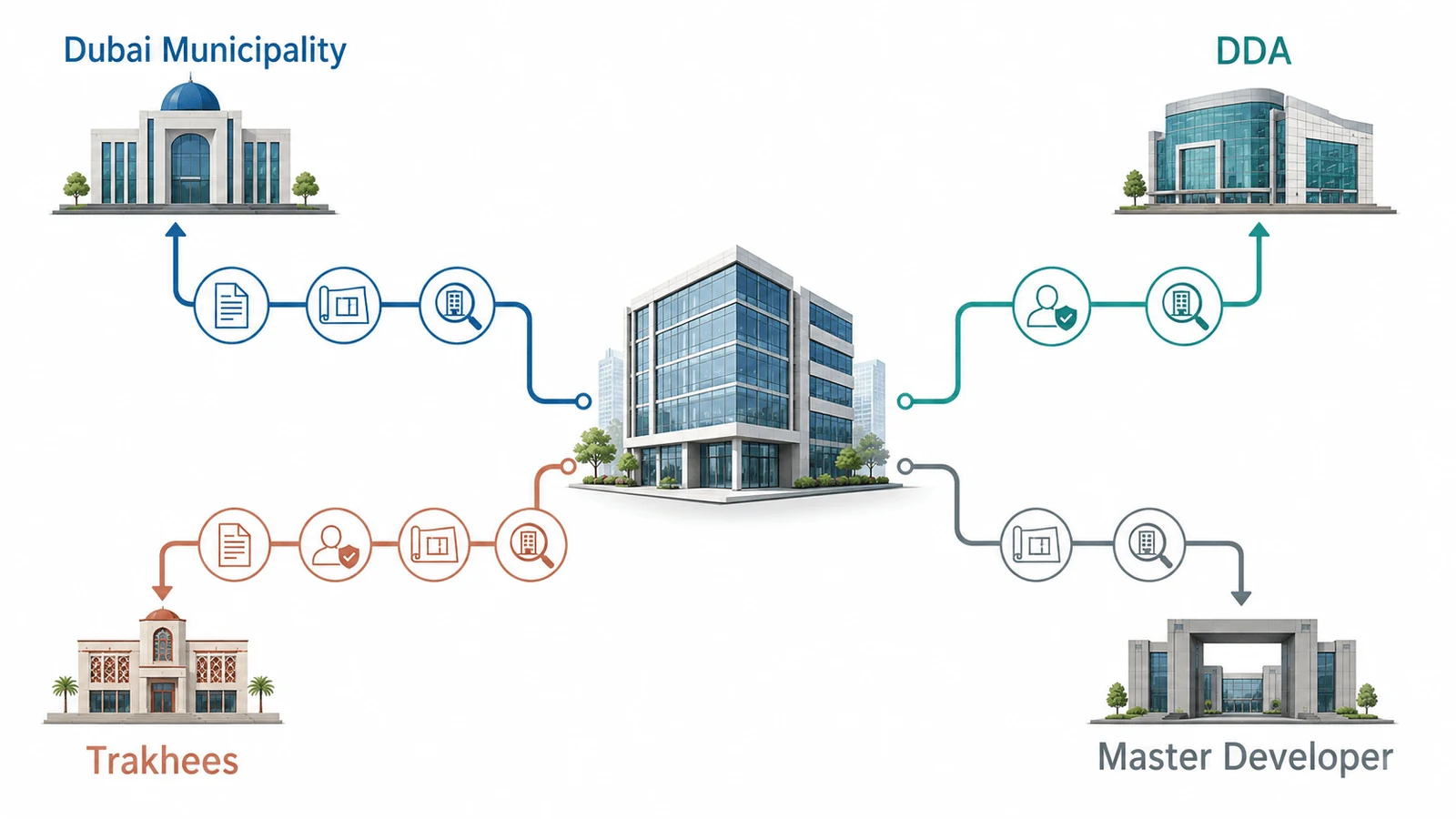
Next, test the company’s local knowledge. The approval route depends on the property, development and planned work. Dubai Municipality, DDA, Trakhees, free-zone authorities and master developers may review projects in different areas.
Dubai Municipality publishes building permit procedures covering permits, completion certificates, inspections and contractor registration. For properties under DDA, listed fit-out permit requirements can include Ejari, approved drawings, an owner NOC and a contractor appointment.
“We handle approvals” is not a complete answer. Give the company your building and project details, then ask it to name the likely authority. You also need to know who prepares the drawings, makes the submission and pays each fee.
Put those duties in the quotation. If the authority requests a revision later, the contract should make responsibility clear.
Ask for a current trade licence, insurance certificate and any registration required by the authority or building. The company should also name the person responsible for site safety.
Compare Fit-Out Quotations and BOQs Side by Side
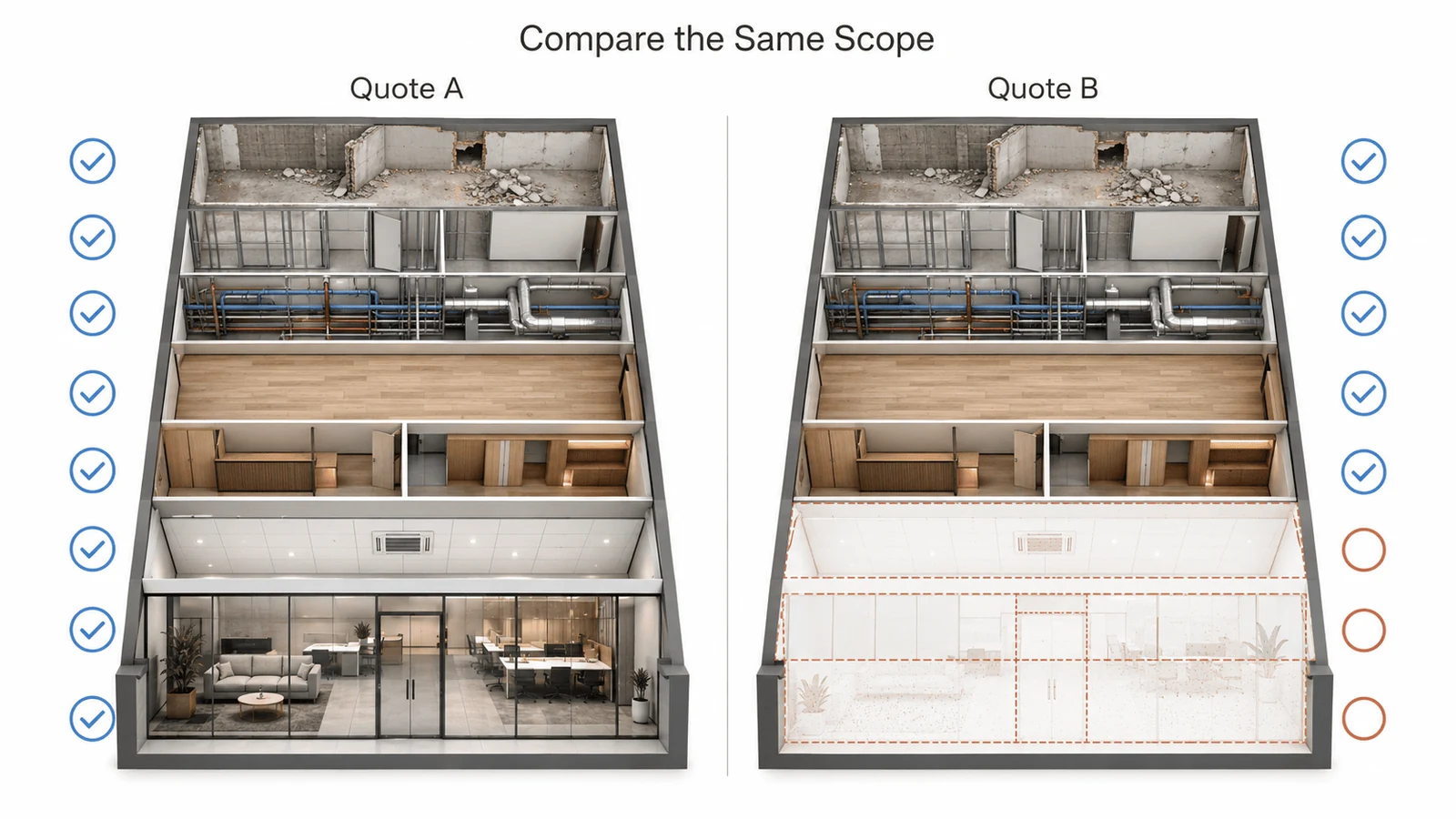
Once the approval duties are clear, compare the quotations line by line. The lowest total can look good on paper because something is missing. Send every shortlisted company the same brief, drawings and material expectations.
Each quotation should include an itemised bill of quantities, or BOQ. Check the quantity, rate and specification of every major item. “Premium tile” means very little, so request the brand, size, finish and approved alternative.
Read the exclusions before comparing the totals because the following items often need a separate line.
- Demolition and waste removal
- Protection for existing floors, lifts and common areas
- Authority, developer and building fees
- MEP testing and commissioning
- Delivery, access equipment and night work
- Final cleaning and snagging
- As-built drawings and handover records
If one BOQ omits testing or final cleaning, mark that gap before deciding.
Material changes need a written rule as well. The contractor should show you the substitute, explain the cost difference and wait for approval before ordering it.
Check Fit-Out Project Management Before Work Starts
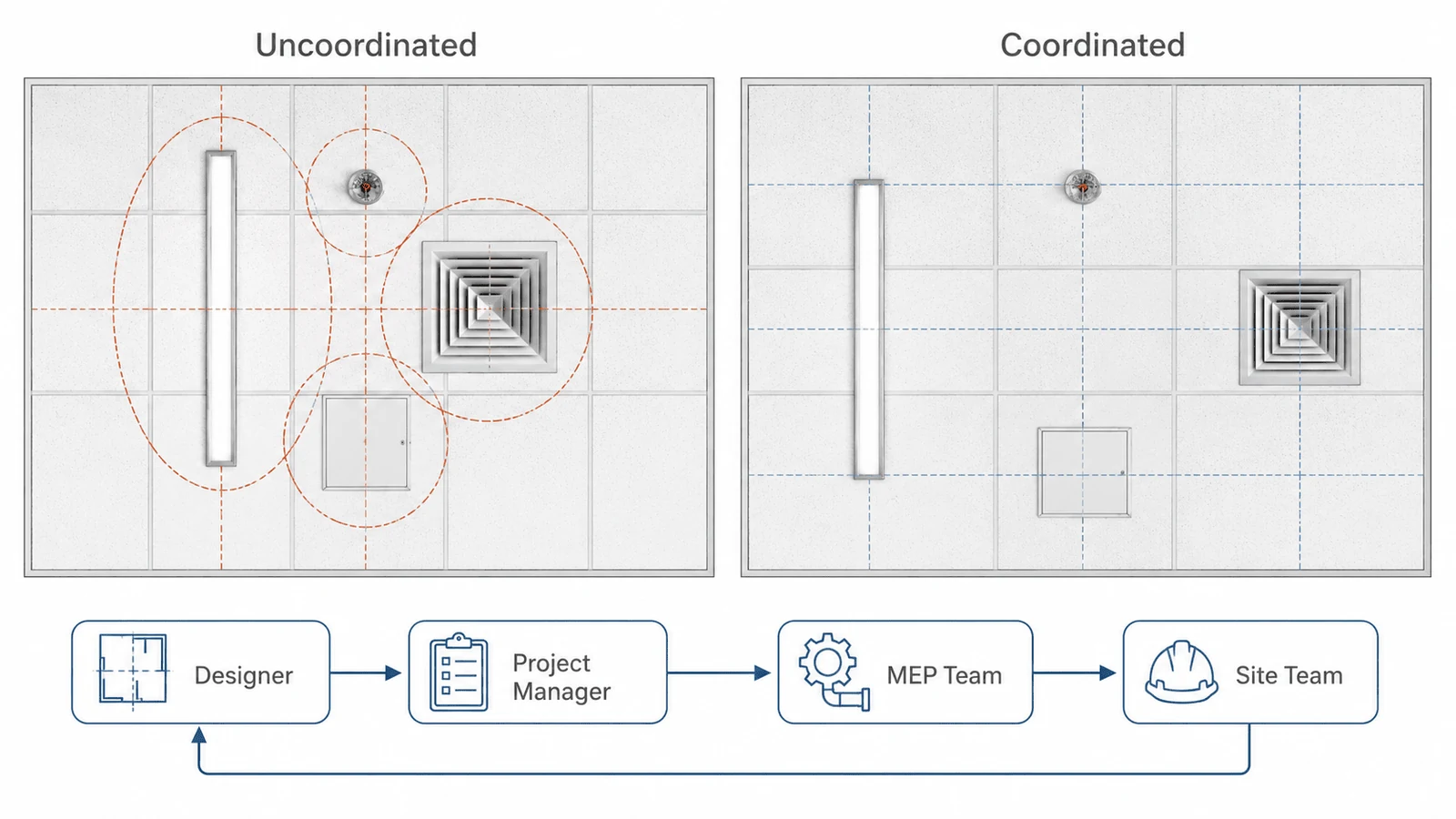
After the scope is priced, the project manager must keep the work in the right sequence. Wall changes delay joinery measurements, and ceiling layouts fail when lights and air-conditioning grilles compete for space.
Missed updates can lead to unpriced changes, disputed instructions and delay. In a 2023 University of Manchester study, Jinpeng Wang’s team analysed responses from 170 construction professionals. The main dispute groups covered delays, communication, contracts, site conditions and design.
Who will keep those parts connected on your project? Ask to meet the project manager and learn how often that person visits the site. A weekly report should show completed work, upcoming tasks, decisions and any delay.
The programme needs dates for approvals, procurement, site work, inspections and handover. It should also flag long-lead materials and show when you must approve them.
Changes will still happen sometimes, but they need control. No extra work should begin until you receive the price and effect on the completion date in writing.
Check Snagging, Warranties and Fit-Out Handover
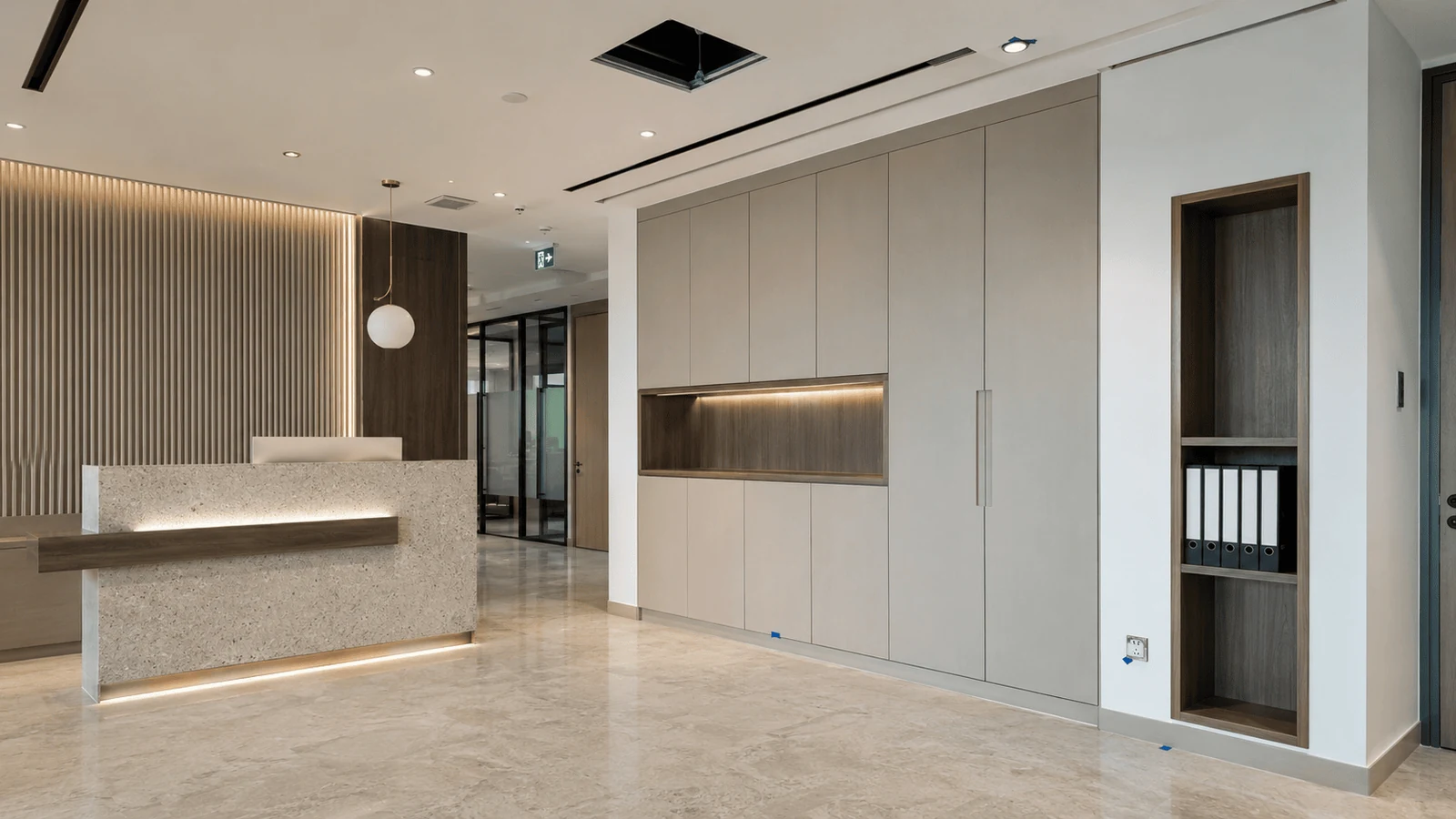
Snagging takes time, so agree on the process before work starts. Decide how defects will be recorded, who checks the corrections and how much payment remains until closure.
The handover file may need as-built drawings, test records, equipment manuals and supplier warranties. List the required documents in the contract.
Confirm the workmanship warranty and get a named contact for problems after handover. You may need help with a dropped cabinet door or failed light circuit.
Each Project Type Brings Different Risks
The checks change with the space because offices, shops, restaurants and homes use services differently.
Commercial offices

Ask the office interior design team in Dubai to show workstation numbers, data points, acoustic details and the air-conditioning layout. The programme must allow for building access approvals before your opening date.
Retail spaces
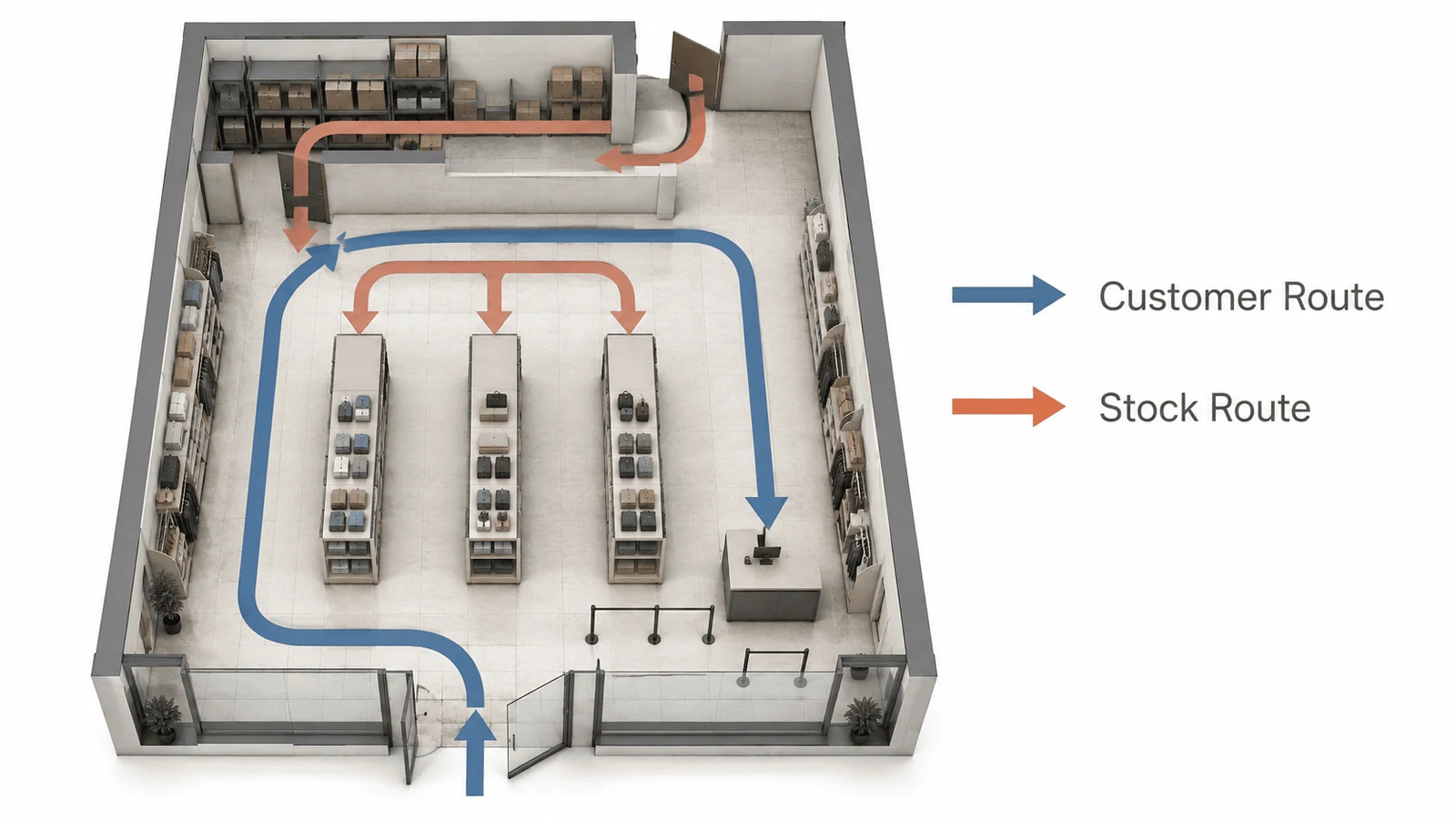
For retail interior design services, check the customer route, checkout queue, stockroom and delivery path. Mall working hours, storefront approvals and late display fixtures can delay opening.
Restaurants and hospitality

Restaurant interior design should connect the dining layout with kitchen equipment, extraction, drainage and service routes. Ask for a project where front-of-house and back-of-house work followed one programme.
Residential interiors
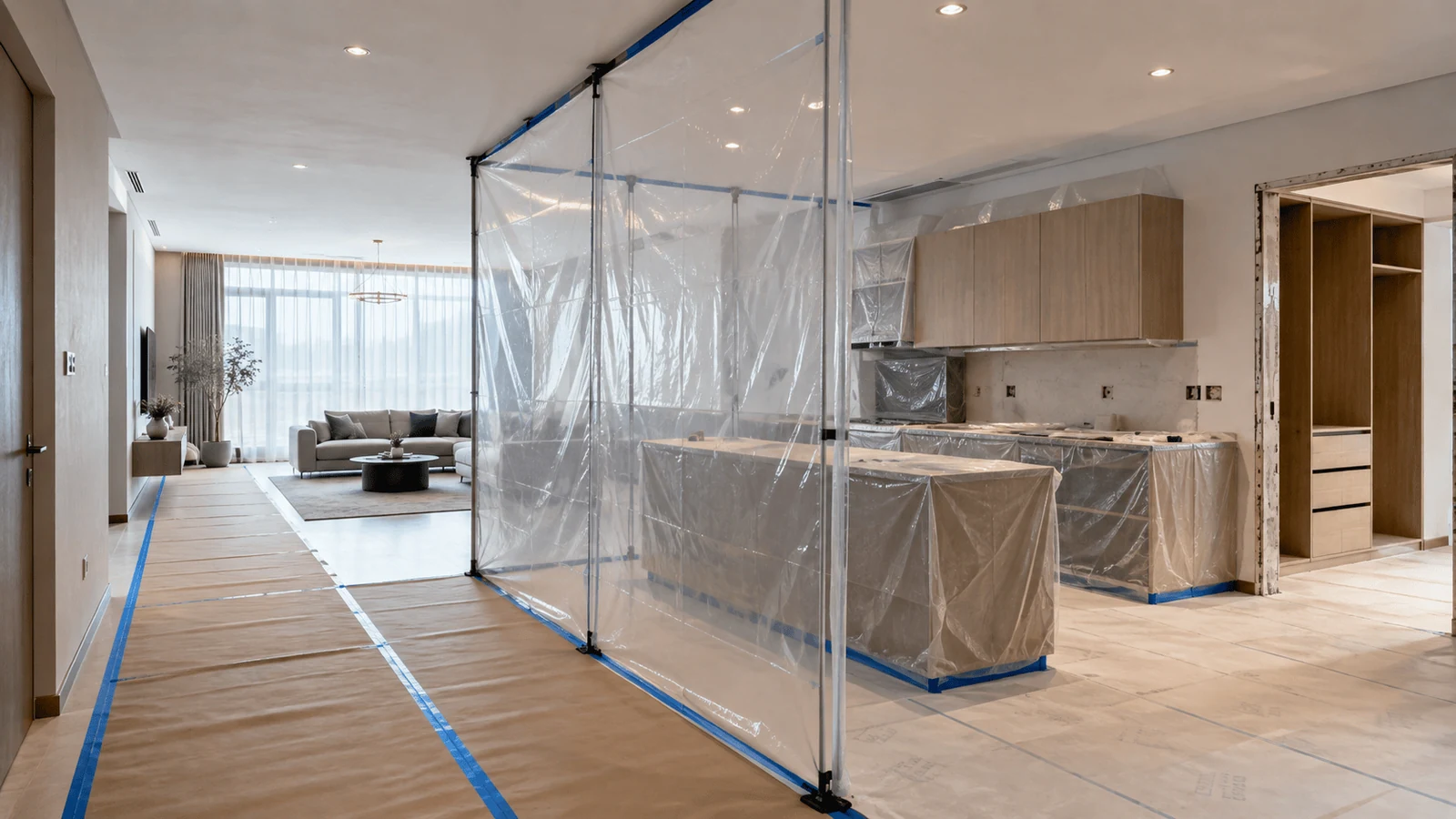
For residential interior design services, inspect kitchens, waterproofing records and wardrobe details. If you remain at home, agree on dust screens, protected routes, working hours and planned water shut-offs.
Connect Interior Design With Fit-Out Execution
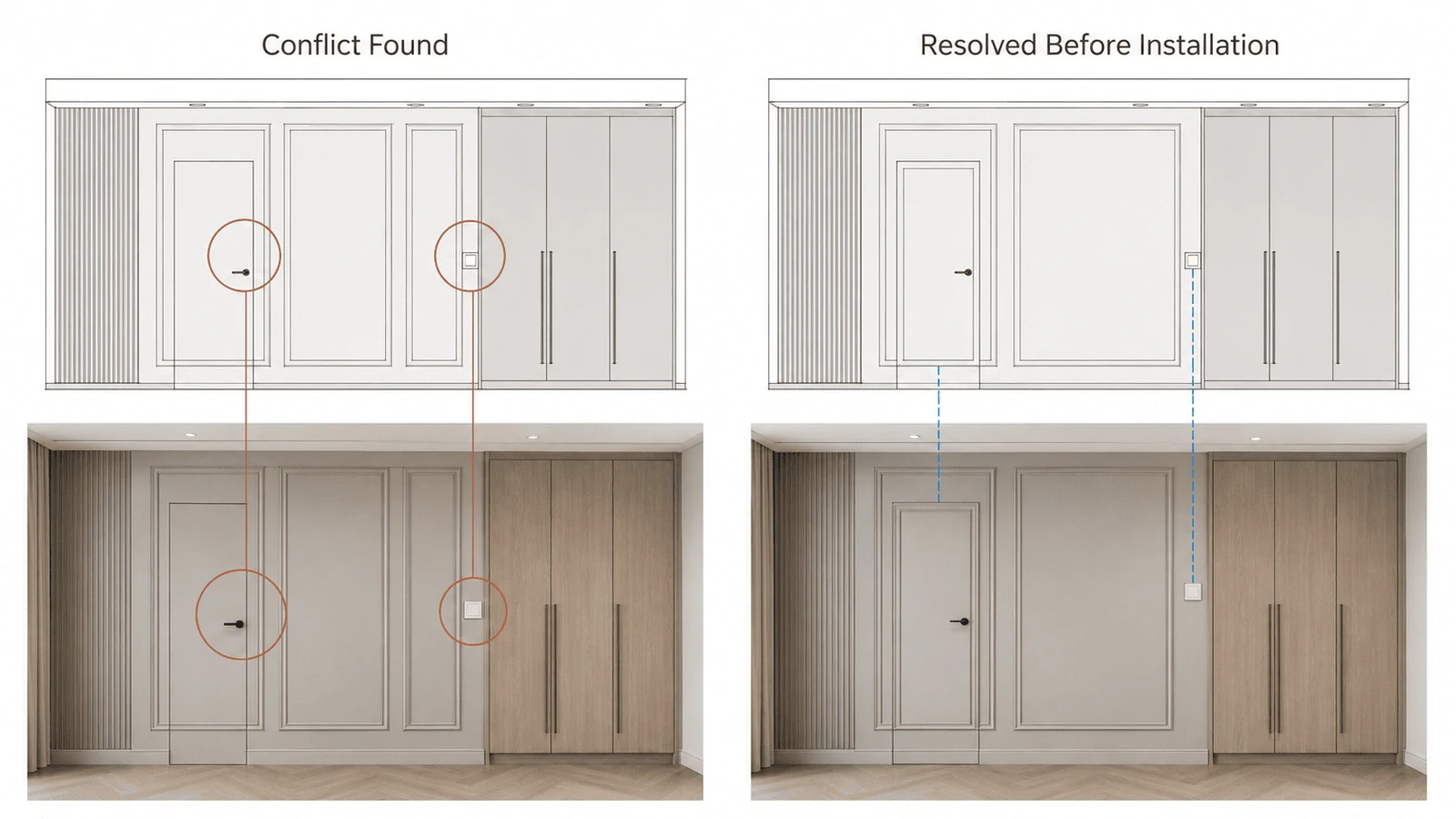
A drawing can look complete while leaving the site team with unanswered questions. A feature wall may block an access panel, while a ceiling detail can leave no room for a grille. Even a wardrobe may cover a switch.
Early coordination lets the designer, MEP team and contractor solve these points before installation. It also gives the estimator enough detail to price the intended design.
Euphoria Interiors provides professional fit-out solutions in Dubai. Its team connects design, approvals, MEP, joinery and site work, which helps stop details from falling through the cracks.
What a “Fit Out Company Near Me” Search Should Tell You
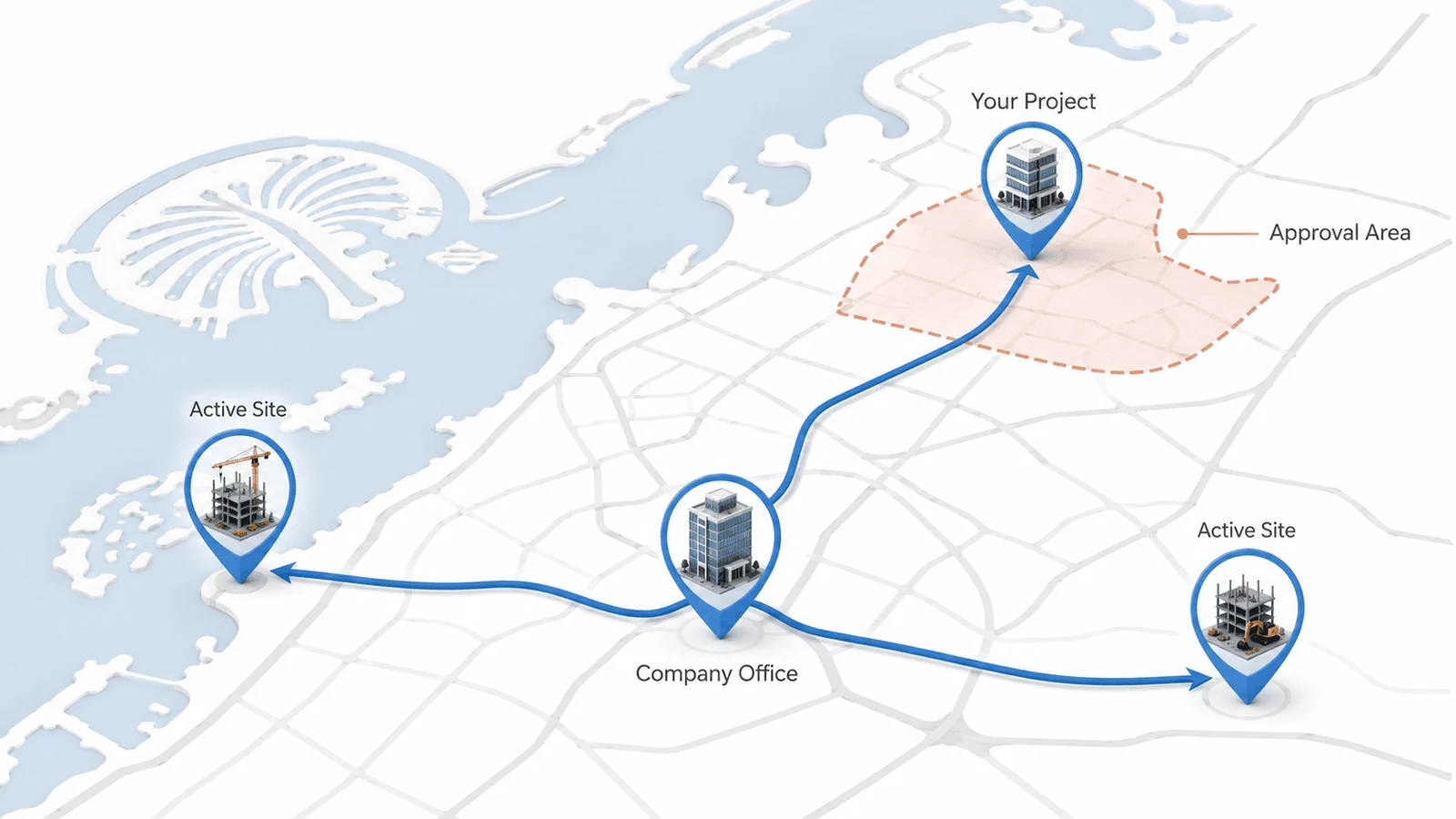
A search for a “fit out company near me” helps you find firms serving Dubai. Distance matters, but it cannot show how well a company will manage your work.
The company should know your building’s access rules and likely approval route. Ask how often its project manager can visit the site and how quickly the team records urgent decisions.
Check the office location, current Dubai sites and areas covered by the site team. After that, use this comparison of fit-out companies in Dubai to assess the names in your “fit out company near me” results by project fit, approval knowledge, BOQ detail and response time.
Take These Questions to the First Meeting
Take these questions to the first meeting.
- Can you show three completed projects similar to mine?
- Which work will your own team handle, and which trades will you outsource?
- Which authority governs this property, and who prepares the submission?
- Can you show your current trade licence, insurance and required registrations?
- What have you excluded from the quotation?
- Does the BOQ name materials, brands, models and payment milestones?
- Who manages the site and reports progress to me?
- How do you approve variations and extra costs?
- What happens if the programme slips?
- Which warranties and handover documents will I receive?
Listen for specific answers supported by names, documents and project examples because a broad reply leaves the risk with you, check more of our interior design category.
Choose the Team That Leaves Fewer Unknowns
The right fitout company in Dubai should make the project clearer before asking for a deposit. By that point, you should know the scope, materials, approval route, price, programme and person responsible for delivery.
If a consultant has already completed coordinated and approved drawings, an execution contractor may be enough. If layouts, MEP, materials and approvals remain open, one design-and-fit-out team can reduce missed information between stages.
Ready to compare your options? Request a fit-out consultation and share your property details, budget and target date. The team can review the project and prepare a clear starting assessment.
FAQs
How do I choose a fitout company in Dubai?
Compare similar projects, approval knowledge, BOQs, materials, project controls and warranties. Visit an active site and speak with an earlier client before deciding.
Should I accept the cheapest fit-out quotation?
Check its scope first because a low price may leave out approvals, testing, installation, cleaning or snagging. Compare matching BOQ lines before ranking the offers.
Do fit-out companies manage approvals in Dubai?
Some companies manage the submission, while others appoint an outside consultant. Confirm the authority, documents, fees and responsible party in writing.
When does a turnkey fit-out company make sense?
Turnkey delivery can suit a project that needs design, approvals and construction under one project lead. Execution-only work may suit complete, approved drawings.
How many companies should I compare?
Three detailed proposals usually give you a useful view of the market. Send each company the same brief so scope, quality and price remain comparable.