


After waiting months for the handover, you get the keys to your new villa or penthouse in Dubai, and instead of the flawless home you paid millions to the developer for, you find a list of problems that needs immediate attention.
After seeing this problem, what will you do? What if it turns into bigger hidden damage?
Then come the barriers: the fit-out company takes weeks to respond, you end up stuck between delays, and extra expenses come up that you were not expecting. If you had kept a fit-out snagging checklist, you might not have ended up in such a situation.
The first step is knowing which kind of problem you have:
- Pre-handover issues come from the developer or builder, which includes base plumbing, electrical distribution, plastering and MEP work left incomplete or done poorly.
- Post-handover issues appear after the fit-out company you hired has completed custom joinery, lighting, wet-area finishes, paintwork and MEP changes.
Ready to protect your investment? Continue reading for our fit-out snagging checklist and learn exactly what to look for during inspection, room by room, before you sign off or release a single dirham of retention.
The Key Provider’s Role: What Developers and Sellers Owe You

Do not expect move-in perfection when buying a new home in Dubai. You may often feel that new buildings are handed over to residents as move-in ready. Developers rush completion to meet deadlines and leave trade subcontractors to finish the last 5% of the cosmetic and MEP works.
You need to know that, according to DLD Law No. 6 of 2019, JOP requires the developer to give a one-year Defect Liability Period (DLP) for architectural finishes, mechanical services and electrical systems, on top of the 10-year structural defect guarantee.
Pre-Handover Snagging Checklist: What to Inspect Before Signing Off
If you have a fit-out snagging checklist before the inspection, you might be able to save yourself from costly expenses. Use this list during your official developer walkthrough.
1. Wet Areas and Plumbing Infrastructure
- Check all plug holes in baths and sinks individually. A missing spring mechanism or rubber washer will stop the plug sealing properly.
- Fill a mug with 1 to 2 litres of water and pour it on your bathroom floor. It should flow freely to the gully trap within 60 seconds and leave no water standing in corners.
- Turn on every tap and flush the toilets together, then listen for shuddering pipes.
- Look underneath the kitchen sink and the vanity sinks for small leaks on braided flexi-hoses.
2. Electrical and Safety Systems
- Use a digital socket tester on all 13A outlets to verify correct polarity, active earth connections, and line-to-neutral voltage alignment under the DEWA domestic wiring regulations. Make sure no open ground or reversed neutral faults exist.
- Confirm every MCB breaker in the consumer unit is clearly labelled in both English and Arabic. Press the test button on each RCCB or RCBO to confirm it trips instantly.
- Check that the ventilation fan exhausts outside and not into the ceiling cavity.
3. Architectural Finishes and Joinery
- Tap floor and wall tiles with a rubber mallet. A hollow sound means insufficient mortar coverage, which can crack tiles under the weight of heavy furniture.
- Hold an LED light source beside the walls and look for waves, flash lines in plaster, or irregular joins in drywall.
- Spray exterior window frames, sliding balcony doors and sill tracks with water to check the perimeter EPDM rubber gaskets seal tightly with no internal seepage.
4. HVAC and Ventilation
- Test the temperature difference between the return air grille and the supply diffuser. The cooling split should sit between 8C and 12C.
- Check the condensate drain lines of the primary and secondary AC units through the ceiling access hatch to confirm they drain clearly with no ponding.
Whether you hire a top fit-out company or not, you must go through this fit-out snagging checklist. Even the best fit-out company can only build what is already behind the walls. Hidden plumbing, wiring, or waterproofing faults can delay your project, spark blame between parties, and put your fit-out work at risk.
Transitioning from Developer Handover to Your Fit-Out Journey

Now it is time to make the space your own and begin converting the standard developer shell into a home built around how you live.
Step 1: Final Keys and Signing Off
Once you are ready to let a hammer loose on site, tie up with your fit-out company and document the handover pack. Make sure you have the following.
- Operations and maintenance manuals for appliances fixed to the property, along with appliance warranty certificates.
- Confirmation that your final account registration with DEWA or your district cooling supplier, Empower or Tabreed, is active so your contractors can work and test.
- Video of every square metre of your site in detail, so you have proof if a fit-out trade damages something later.
Step 2: Reaching Out to a Fit-Out Company
To extend your interior properly, work with a single-source fit-out company in Dubai that covers planning approvals, architectural joinery and turnkey project delivery. Our guide on how to choose a fitout company in Dubai sets out the licence, scope and quotation checks worth running before you appoint anyone.
During your initial consultation, provide:
- The master developer fit-out manual, which sets out working hours, security deposits and noise regulations.
- A drawing of the MEP lines so the fit-out company knows where supply lines and structure sit.
- A clear scope of works listing structural work, joinery, sanitary upgrades and lighting modifications.
What is Post-Handover Snagging? Protecting Your Fit-Out Investment
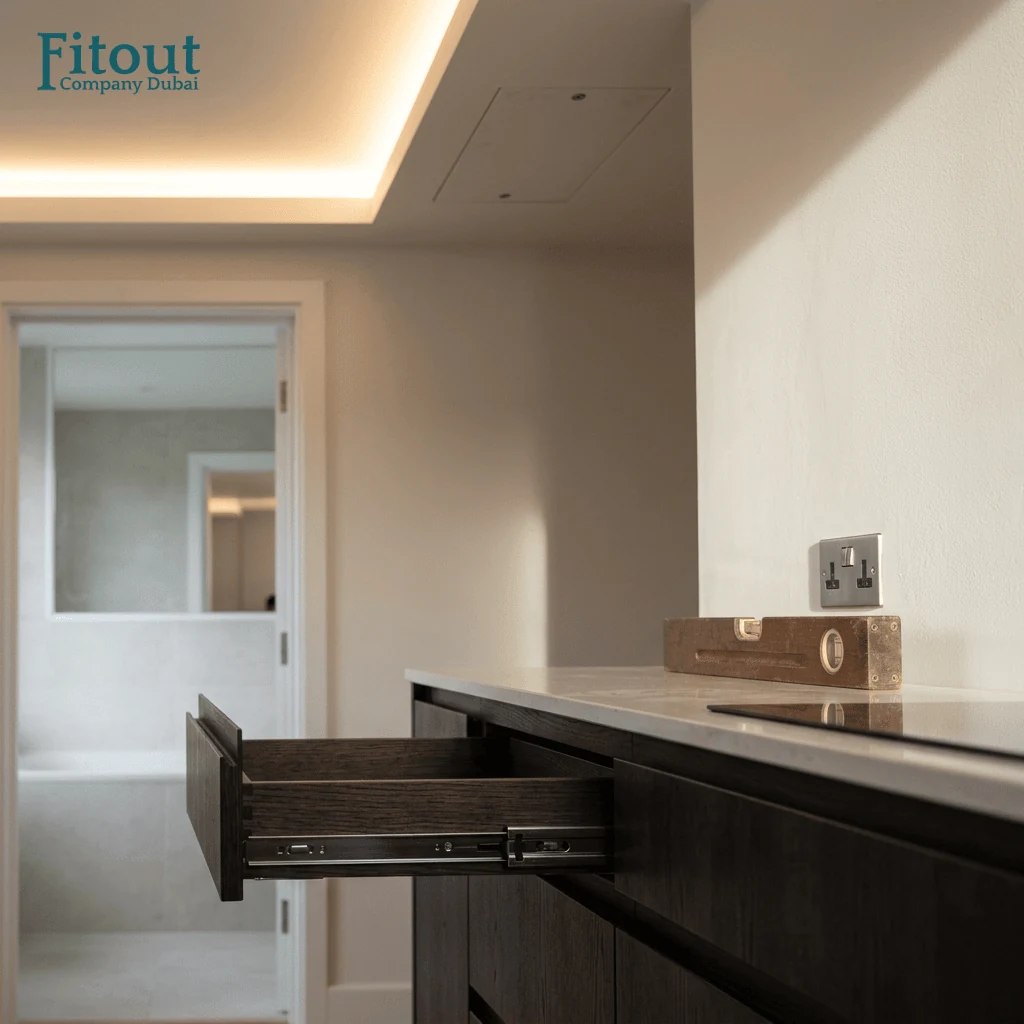
Post-handover snagging happens immediately after your fit-out company has completed its work and the space has been handed back to you.
This inspection targets the modified electrical loops, customised joinery and architectural detailing rather than the base build.
The Role of Post-Handover Snagging
Always negotiate with your contractor that you can retain 5% to 10% of your final payment. This is your legal insurance policy under the UAE Civil Transactions Code, allowing you to give final clearance only when the installed specifications match the approved drawings, specifications and technical standards.
While researching this topic, I found that property handovers and fit-out snagging in Dubai are a common dilemma among new homeowners. They post questions such as whether a professional snagging inspection is necessary or just an unnecessary expense. Across social platforms and community forums, experienced buyers consistently warn against skipping this step.
One homeowner found over 300 separate issues that had to be fixed, from minor damage to much bigger problems. Another found cosmetic flaws like wall cracks and scratched wardrobe doors alongside serious liabilities such as concealed plumbing leaks.
My reading of this is that those who bypassed a final fit-out snagging inspection routinely voiced deep regret after being left to shoulder costly repairs themselves. A professional inspection is worth the spend, since it protects your investment and spares you long-term frustration.
A rigorous fit-out inspection confirms that custom joinery follows the millwork drawings exactly as approved. Re-routed MEP systems should meet the Dubai Municipality building code.
Post-Handover Fit-Out Snagging Checklist
Do not sign off on handover or release the retention payment without running through this fit-out snagging checklist with your fit-out company on site.
1. Custom Joinery and Cabinetry
- Inspect all wardrobe doors and kitchen drawers. Soft-close units should be silent, and the panel reveal should stay consistent at 2mm.
- Run your fingers along the unexposed top and bottom edges of all cabinetry doors. Untrained contractors often skip edge-banding on non-visible edges, leaving the raw MDF core vulnerable to swelling in Dubai’s summer humidity.
- Open custom media walls and work desks, then check that power, HDMI and Cat6 grommets are accessible with no pinched wiring.
2. Specialised Lighting and Electrical Relocations
- Turn on all architectural cove lighting and listen for the high-pitched buzz of bargain transformers. Ask your project engineer where the LED drivers sit. They must be housed within accessible service hatches, never sealed permanently behind fixed gypsum boards.
- Work a dimmer from 5% to 100%. LED drivers that are not dimmable can strobe or flicker when wired to phase-cut dimmer switches.
- Use a spirit level on your light switches, thermostats and socket plates to check they sit level.
3. Bespoke Wet Areas and Custom Finishes
- Check the silicone sealant beads at the edges of bespoke mirrors and backsplashes. The bead should be anti-fungal and form a complete, continuous ring.
- Check that wall-mounted basin mixers align perfectly and do not move at all when pushed lightly by hand.
- Inspect shower tile grout under directional LED lighting. Look for hairline pinholes, which let water bypass the tiles and eventually degrade the waterproof tanking membrane underneath.
4. Ceilings, Partitions and Paintwork
- If shadow line details were built around doors or baseboards, check the reveals are uniform with no paint pooling.
- Check that gypsum ceiling access panels sit flush and work on their push-latches without sticking to the plaster perimeter.
- Inspect finished walls in early morning or late afternoon light, or with horizontal work lights. Look for roller lint, flashing and visible cut-in brush marks across large wall planes.
Protect Your Investment Before You Sign Off
Identifying fit-out snags early is not about being difficult. It is how you protect your investment. Whether you are getting the master developer to acknowledge that a plug seal was never fitted pre-handover, or pressing the fit-out company to align the joinery in your custom wardrobes properly, technical diligence is money well spent.
Stand your ground on quality, set clear contractual milestones, verify what sits behind the walls and under the sink, and do not pay final retention without clear warranties and guarantees in writing.
Ready to protect your investment? Contact our team today for a free tailor-made quote on fit-out or snagging projects.
FAQs
What is the difference between pre-handover and post-handover snagging?
Pre-handover snagging covers the developer’s base build work, including base plumbing, electrical distribution, baseline plaster and structural items, before you take occupancy. Post-handover snagging covers custom finishes, fit-out alterations, millwork and MEP modifications carried out by your fit-out company, before you release their final retention sum.
What is the retention limit for a fit-out company?
Retention in the UAE fit-out market generally ranges from 5% to 10% of the total contract value, and that is the range usually worth holding. The balance is normally released 30 to 60 days after practical completion, which gives you time to settle in and check for hidden plumbing leaks, electrical faults or joinery issues.
How do I fix a slow draining bath?
This is almost always caused by the rubber O-ring seal around the pop-up clicker being lost, pinched or damaged. If you are within your first year after handover, it falls under the developer’s Defect Liability Period. Report it through the urgent maintenance function on your developer portal so the drain assembly can be serviced or replaced.
Does the one-year Defect Liability Period still apply if I do a fit-out?
Partly. Changes made by your fit-out company can void the developer’s warranty on the part of the space that was altered, such as rerouted plumbing lines or cut AC ducts. Always get a formal NOC from your master developer before starting internal work so your remaining base-build warranties stay intact.
What are the most common defects in Dubai homes?
The common ones are hollow or cracked tiles, uneven paint and plaster, poorly sealed wet areas, leaks from AC condensation, mismatched joinery, and lights or sockets that do not work. Warped or unsealed MDF edges are a common humidity sign.
When is the best time to book a snagging inspection after handover?
Book it after your fit-out contractor signs off practical completion but before your retention period ends. Repairs are quicker and cheaper while the contractor is still on site.